Embarking on the journey of launching a business in Luxembourg requires meticulous planning and understanding of the diverse legal structures available. Let’s review the common company types in Luxembourg, the requisite documentation for registration, the incorporation process, and the multitude of advantages awaiting entrepreneurs in Luxembourg, this dynamic European nation.
Badanie spektrum typów spółek w Luksemburgu
Prywatna spółka z ograniczoną odpowiedzialnością (S.à.r.l./Société à Responsabilité Limitée)
Spółka S.à r.l. (société à responsabilité limitée ), wykorzystywana głównie w przypadku restrukturyzacji spółek lub przedsiębiorstw o umiarkowanej wielkości, oferuje elastyczność w zakresie struktury organizacyjnej i zarządzania. Akcjonariusze korzystają z ograniczonej odpowiedzialności, przy minimalnym wymogu jednego dyrektora i jednego akcjonariusza. Minimalny kapitał zakładowy wynosi 12 000 EUR i jest płatny z góry w różnych walutach. Przenoszenie udziałów na osoby trzecie jest prawnie ograniczone, a rozwiązanie spółki wymaga spełnienia określonych warunków.
Spółka akcyjna z ograniczoną odpowiedzialnością (S.A. – Société Anonyme)
S.A., druga najbardziej rozpowszechniona forma działalności gospodarczej w Luksemburgu, działa w regulowanych ramach prawnych. Akcjonariusze korzystają z ograniczonej odpowiedzialności, a akcje są zbywalne i zbywalne. Założenie spółki wymaga co najmniej jednego dyrektora i jednego udziałowca, z minimalnym subskrybowanym kapitałem zakładowym w wysokości 31 000 EUR. Akcje bez prawa głosu mogą być emitowane na określonych warunkach, a dostęp do rynków finansowych jest ułatwiony poprzez emisję obligacji lub notowania giełdowe.
Société par Actions Simplifiée (SAS)
Wprowadzony niedawno do luksemburskiego systemu prawnego SAS pod wieloma względami odzwierciedla spółkę akcyjną. Do założenia spółki wymagany jest co najmniej jeden wspólnik, a formalności są podobne jak w przypadku spółki S.A. Wymagany kapitał spółki SAS wynosi co najmniej 30 000 EUR, a publiczna emisja akcji jest zabroniona.
Uproszczona spółka z ograniczoną odpowiedzialnością (SARL-S)
For detailed insights into SARL-S, please refer to dedicated resources.
Jednoosobowa działalność gospodarcza
Jednoosobowa działalność gospodarcza, skierowana do osób fizycznych działających pod własnym nazwiskiem, wiąże się z pełną odpowiedzialnością za finansowanie działalności i zobowiązania prawne. Osoby prowadzące jednoosobową działalność gospodarczą muszą zarejestrować się we Wspólnym Centrum Ubezpieczeń Społecznych w celu uzyskania ochrony socjalnej.
Dokumentacja niezbędna do rejestracji spółki
Entrepreneurs venturing into Luxembourg‘s business realm must compile the following documents:
Dokumenty osobiste: Dowody tożsamości, potwierdzenie miejsca zamieszkania, zaświadczenia o niekaralności, notarialne zaświadczenia o niekaralności oraz odpowiednie dyplomy edukacyjne.
Dokumenty korporacyjne: Statut, dane dotyczące kapitału zakładowego, informacje o akcjonariuszach i dyrektorach oraz bankowe certyfikaty depozytu kapitałowego.
Main steps to launch your company in Luxembourg
Założenie spółki w Luksemburgu obejmuje następujące kluczowe kroki:
- Wybór nazwy firmy: Wybierz unikalną i odpowiednią nazwę dla swojej firmy.
- Informacje o działalności: Podaj szczegółowe informacje na temat swojej działalności biznesowej.
- Otwarcie firmowego konta bankowego: Załóż dedykowane konto bankowe dla swojej firmy.
- Wkład kapitałowy: Wpłata autoryzowanego kapitału na wskazane konto.
- Notarialne poświadczanie dokumentów: Upewnij się, że wszystkie istotne dokumenty zostały prawidłowo poświadczone notarialnie.
- Wpis do rejestru handlowego: Rejestracja spółki w rejestrze handlowym.
- Przypisanie numeru identyfikacji podatkowej: Uzyskaj numer identyfikacji podatkowej dla swojej firmy.
- Chociaż Luksemburg szczyci się sprawną biurokracją, należy pamiętać, że czas przetwarzania autoryzacji zwykle wynosi kilka tygodni ze względu na niewielkie rozmiary kraju.
Zalety założenia firmy w Luksemburgu
Stabilność gospodarcza: Luksemburg utrzymuje stabilność wśród globalnych wahań gospodarczych.
Środowisko pro-biznesowe: Kraj oferuje środowisko sprzyjające rozwojowi biznesu, z minimalnymi kontrolami walutowymi i kwitnącym krajobrazem inwestycyjnym.
Centrum finansowe: Dzięki solidnemu sektorowi bankowemu i kwitnącemu sektorowi funduszy inwestycyjnych Luksemburg służy jako globalne centrum finansowe.
Korzystny system podatkowy: Przedsiębiorcy korzystają z korzystnych ram podatkowych i prawnych w Unii Europejskiej.
Dlaczego warto wybrać Damalion do zakładania spółek w Luksemburgu?
Poruszanie się po niuansach rynku luksemburskiego wymaga specjalistycznej wiedzy i znajomości lokalnego rynku. Dzięki wsparciu Damalion przedsiębiorcy uzyskują dostęp do kompleksowych informacji i wskazówek niezbędnych do odniesienia sukcesu biznesowego w Luksemburgu.
For seamless company formation in Luxembourg, contact your Damalion expert today and unlock the opportunities awaiting your venture.
Your guide to register your commercial company in Luxembourg — legal forms (Sàrl, Sàrl-S, S.A., SAS), share capital, documents, notary and RCS filing, bank account, tax registrations and 2025 filing rules.
For entrepreneurs, family offices, holding companies, SPVs and international groups • Damalion helps you structure the project, prepare the file and coordinate with local partners. Registration, licensing and bank acceptance remain with the competent authorities and financial institutions.
Last updated:
What keeps Luxembourg company registration on track?
Choose a legal form that matches your activity and investors, show a clear ownership chart, and prepare complete documents for the notary, the Luxembourg Trade and Companies Register (RCS), the beneficial owner register and the tax authorities. Add a short description of the business model, expected size, staff and locations. A clear file makes it easier for notaries, banks and authorities to check identity, origin of funds and management responsibility.
Core documents for incorporation
- For shareholders and managers: valid passport or ID card, recent proof of address, basic CV, information on professional background and declaration on ultimate beneficial ownership.
- Personal checks: criminal record extract where required, proof of good standing in other jurisdictions if requested, and, for persons registered with the RCS, a Luxembourg national identification number or equivalent reference when applicable.
- For the company: draft articles of association, information on share capital, number and type of shares, registered office address and governance rules (managers, board, powers of representation).
- Business information: description of planned activities, expected clients and suppliers, main countries of operation, forecast turnover range and staff numbers.
- Banking and capital: draft bank letter for capital deposit, proof of origin of funds for the paid-in capital, and details on expected payment flows once the company is active.
- Translations and legalisations: certified translations and apostilles if the notary, the bank or the authorities ask for them.
Main company forms at a glance
| Topic | Sàrl | Sàrl-S | S.A. / SAS |
|---|---|---|---|
| Typical use | Trading, services, holding structures for small and mid-size projects | Micro and small businesses, first-time entrepreneurs with limited initial capital | Larger transactions, listings, structures with many investors |
| Minimum capital | At least EUR 12,000, fully subscribed and paid up at incorporation | Between EUR 1 and EUR 12,000, fully subscribed and paid up | Usually at least EUR 30,000 for an S.A.; at least EUR 30,000 for an SAS, paid according to the law |
| Shareholders | 1 to 100 shareholders, natural or legal persons | 1 or more shareholders, usually individuals starting a business | No upper limit; flexible shareholding, including institutional investors |
| Governance | One or more managers, with powers set in the articles or by shareholder resolutions | Similar to the Sàrl, but with simplified rules and standard templates in many cases | Board of directors or management body, more formal governance and reporting duties |
| Transfer of shares | Transfers to third parties are restricted; often need shareholder approval or notarial deed | Transfers can be limited in the articles; rules must protect creditors and minority interests | Shares are in principle freely transferable, subject to law, market rules and articles |
Steps to register your commercial company in Luxembourg
- Define the project and choose the legal form. Confirm whether a Sàrl, Sàrl-S, S.A. or SAS is suitable, taking into account capital, investors, governance and exit plans.
- Select the company name and registered office. Check name availability, agree the address of the registered office and confirm if additional premises will be used for the activity.
- Prepare shareholder and manager documents. Collect identity documents, proof of address, background information and ownership details for all natural persons and entities involved.
- Open a bank account for capital deposit. Provide KYC information to the bank, explain the project and arrange the deposit of the share capital in the name of the company in formation.
- Draft and sign the articles of association. Work with a notary or qualified adviser to prepare the deed. For most Sàrl and S.A. structures, a notarial deed is required; simplified forms may allow private deeds under specific conditions.
- File with the RCS and publish required information. Submit the incorporation deed, company data and information on managers and shareholders, and ensure publication in the electronic gazette where required.
- Register beneficial owners. File the details of ultimate beneficial owners in the Luxembourg register of beneficial owners (RBE) and keep data up to date.
- Complete tax and social security registrations. Apply for a tax identification number, VAT number if needed, and register with the Joint Social Security Centre when staff are hired.
- Obtain business licence where required. For commercial, craft or certain service activities, apply for an establishment authorisation from the Ministry of the Economy or other competent authority.
- Set up governance, accounting and internal controls. Put in place accounting systems, signature rules, internal policies and calendars for meetings, filings and tax payments.
Costs and timelines
- Incorporation costs: notary fees, legal and advisory fees, RCS filing fees and publication costs. Fees depend on the chosen legal form and the complexity of the structure.
- Capital deposit and banking: the share capital must be paid in, and banks may apply account opening and maintenance fees.
- Ongoing costs: domiciliation, accounting, audit, tax compliance and licence renewals where applicable.
- Timelines: once documentation, capital deposit and KYC checks are complete, many straightforward Sàrl incorporations can be finalised within a short period. Projects that require licences, several shareholders or complex structures normally take longer.
Related reading
Frequently asked questions
Who can register a commercial company in Luxembourg?
Which legal forms are most commonly used for commercial companies?
What are the minimum share capital requirements?
Is a notarial deed always required for incorporation?
Do shareholders or managers need to be resident in Luxembourg?
What is the role of the Luxembourg Trade and Companies Register (RCS)?
Have RCS filing requirements changed for 2025?
Is there a separate register for beneficial owners?
Are there restrictions on foreign ownership of a Luxembourg company?
When is a business licence required?
How long does incorporation usually take?
Can incorporation be completed without a physical visit to Luxembourg?
What accounting and audit obligations apply?
Which taxes apply to commercial companies?
What substance requirements should be considered?
Can a shelf company be used instead of a new incorporation?
Which documents do banks ask for when opening a company account?
What happens if filing or publication duties are not respected?
How are later changes to the company recorded?
Does Luxembourg offer a simplified regime for small entrepreneurs?
10 banks in Luxembourg
- Spuerkeess (Banque et Caisse d’Épargne de l’État)
- Banque Internationale à Luxembourg (BIL)
- BGL BNP Paribas
- Banque de Luxembourg
- ING Luxembourg
- Banque Raiffeisen
- POST Finance (POST Luxembourg)
- Societe Generale Luxembourg
- Deutsche Bank Luxembourg S.A.
- DZ PRIVATBANK S.A.
10 best things to do in Luxembourg during your 24h business trip
- Explore the Bock Casemates (UNESCO-listed fortifications)
- Walk the Chemin de la Corniche (“most beautiful balcony in Europe”)
- See the Grand Ducal Palace and surrounding old town
- Visit Notre-Dame Cathedral
- Ride the Pfaffenthal Panoramic Elevator for skyline views
- Discover the Lëtzebuerg City Museum
- Visit Mudam Luxembourg – Museum of Modern Art
- Have a coffee at Place d’Armes (central square)
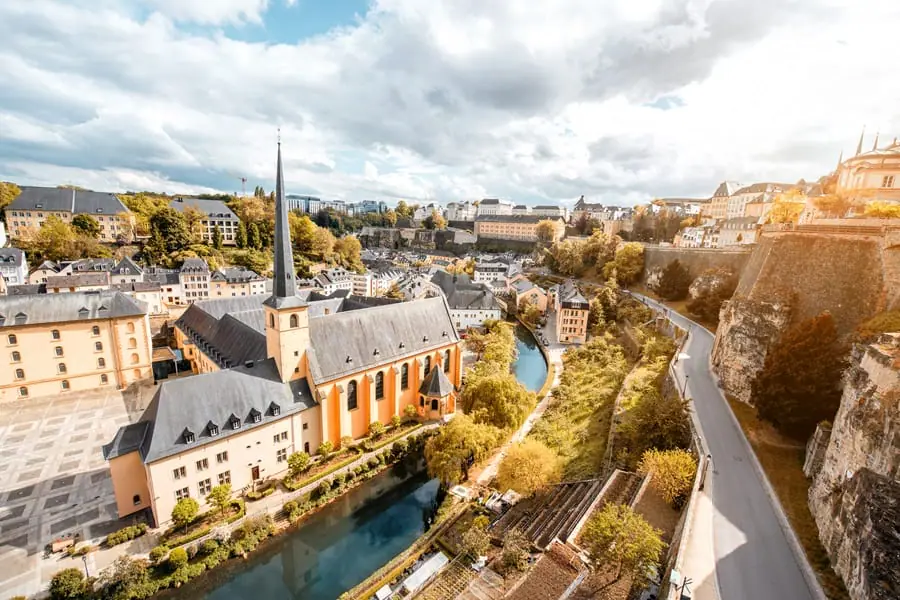
- Walk through Grund and Neimënster Abbey cultural centre
- Follow the UNESCO “Old Quarters and Fortifications” trail