
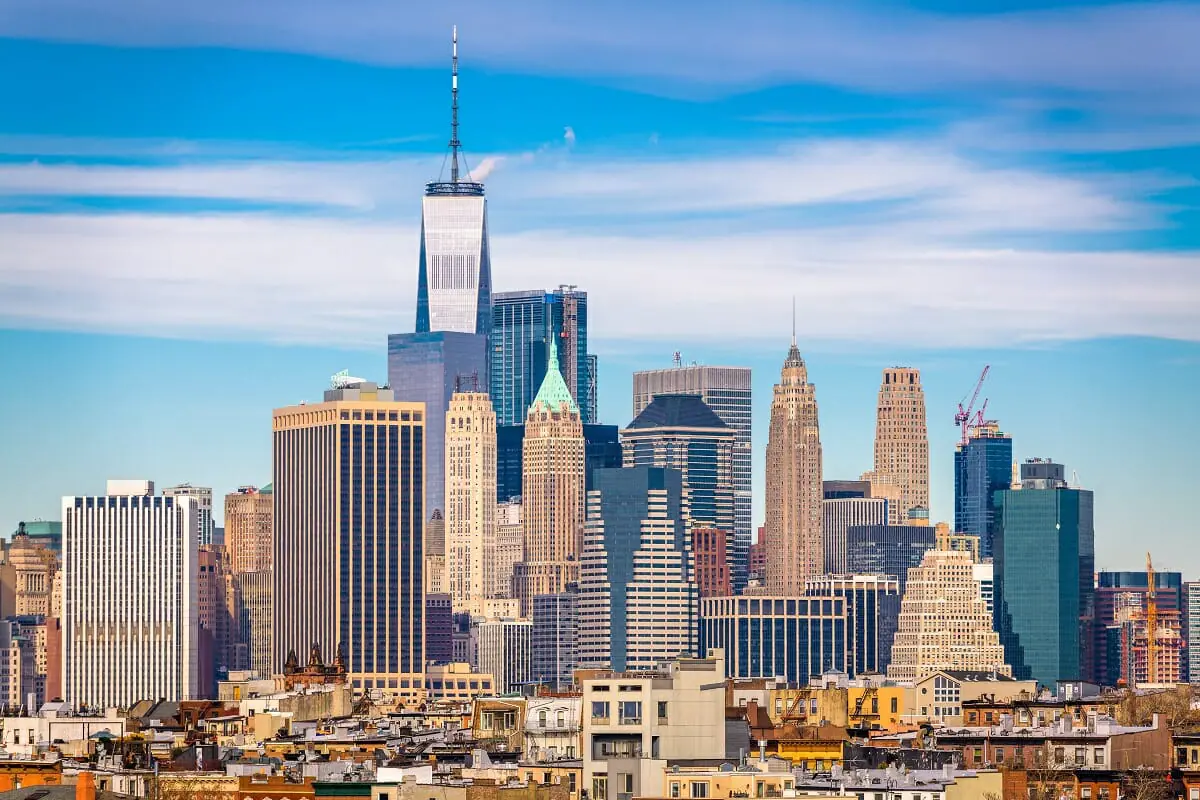
Things Foreign Buyers should know about apartments in Manhattan, United States of America
Many Foreign buyers, when it comes to buying an Apartment In Manhattan, might be clueless regarding a number of areas, from how New York real estate works, to their various choices. The following guide is for anyone in this situation, who is contemplating purchasing an apartment in Manhattan despite being a citizen and resident of another country.
- One significant thing that must be understood is that no matter what option for New York property ownership one selects, there will be additional expenses associated with it, other than the purchase. Fortunately, an owner can deduct many of these costs from his or her taxable income, such as real estate taxes, carrying charges, and the interest that a co-op shareholder pays from the mortgage.
- You will probably need to have a broker, as most sellers have brokers, and these brokers do not represent the buyer’s rights. Brokers offer immunity to the seller, and so the buyer ought to have one, as well.
- There are 3 types of residential property in New York:
- condos (condominiums),
- co-ops (cooperatives),
- and townhouses.
- It is possible for a foreigner who is not a US citizen, who does not live permanently in the US, and who doesn’t work there to buy an apartment in New York as long as that individual has enough money to purchase there but note, not every apartment that is shown as available for sale can be purchased by a foreign buyer.
- While basically every condo available for sale in Manhattan can be acquired by a foreigner, it becomes a little more complicated in the case of co-ops, so it is advisable to discuss your conditions and your situation with a trusted buyer’s agent and then decide what kind of property to focus on and what would work best for your advantage.
- New York Condo apartments are the most ideal option, especially for investor buyers who want to purchase an apartment in order to rent it out.
- It’s not that difficult for a foreign buyer to procure a United States mortgage as most of the banks in the US now have programs in place intended for foreign buyers, as long as this buyer fulfils the bank’s lending requirements.
- Co-op owners are charged maintenance fees every month, while condo owners are charged common fees as part of their monthly expenses. The better amenities a building has, the higher the fee is, so these charges can range from hundreds to thousands. There are also real estate taxes linked with property ownership that owners have to pay to the city, but owners with diplomatic immunity do not have to pay property taxes.
- All dimensions in New York are usually given in feet, and area is described in square feet, so if you come from a metric country, take note of this conversion.
- Kitchens in New York are always fully provided with Sociétés, a refrigerator, a gas range/oven, and in some cases, with dishwasher and microwave oven. And Bathrooms are usually equipped with mirrored storage Sociétés above the sink as well as a sink bathroom vanity cupboard.
- If there is a garage in the building, it is never covered by the apartment maintenance fee, so there will be a separate monthly charge if you want to park your vehicle there.
- Washer/Dryer is not always allowed inside apartments, so always check with the management, do not assume that you can install Washer/Dryer if you wish to. In newer condos, most apartments do have a washer/Dryer installed. Additionally, essentially all buildings have separate laundry rooms.
- Not all buildings allow pets and some might even have weight restrictions on dogs. So make sure to assess before buying.
- Having an attorney is also absolutely important. Attorneys are needed to obtain insurance, perform a search on the title, and research any violations on the building, in addition to negotiating the contract, and the initial agreement that goes hand-in-hand with paying the deposit.
- In certain buildings, health clubs and pools are usually included in the monthly maintenance fee but in some, there might be an extra charge.
- In most condo buildings, gas, heat and hot and cold water are included in the monthly maintenance but occupants will have to pay for other utilities, such as electricity, phone, or cable.
- New condo developments could appear a bit more expensive, however, they often have so-called tax abatements, which means that the new owner will pay much lower tax rates for the next decade if they buy in such a building.
- When purchasing an apartment in a brand new condo building directly from the sponsor, the buyer is usually asked to pay transfer taxes and the sponsor’s attorney fee, but these can be sometimes negotiable.
- A foreign buyer does not necessarily have to buy a condo apartment in New York under his own name. He can purchase it under the name of an LLC. When you buy under the name of an LLC, your real name is hidden from public records.
Before searching for a home in New York City, a buyer should decide on his or her desired neighbourhood, the type of housing he wants, and the purchase price he wants. So when considering all this, a buyer should also decide on his specific needs, such as the amount of space in the apartment, the building’s amenities, and the building’s location and proximity to local amenities. Also, the buyer should consider his income level.
Are you ready to purchase an Apartment In Manhattan?- Let’s go ahead together and contact your Damalion expert now to buy your apartment in New York.

Buy your apartment in Manhattan, New York City — condo vs co-op, costs and taxes, broker and attorney roles, financing basics, building rules, and closing steps.
For international buyers, entrepreneurs, family offices and private investors • We help you prepare a clear file and coordinate with trusted providers. Acceptance and timing depend on third parties and building rules.
Last updated:What speeds up a Manhattan purchase?
Decide early: condo, co-op, or townhouse. Set budget for price and closing costs. Hire a licensed broker and a New York real-estate attorney. Prepare ID, proof of funds, and (if financing) bank pre-approval. Keep your offer, documents, and timelines simple and consistent.
Basic documents buyers prepare
- Valid passport/ID and proof of address.
- Proof of funds (bank statements) and source of funds note.
- If financing: bank pre-approval and later a formal commitment letter.
- For co-ops: detailed board application (financials, references, employment letter).
- Attorney details for contract review and title/coop due diligence.
Property types at a glance
| Topic | Condo | Co-op | Townhouse |
|---|---|---|---|
| Ownership | Real property (deed + unit) | Shares in a corporation + proprietary lease | Land + building (fee simple) |
| Board approval | Usually limited review | Full board package + interview | N/A |
| Subletting | Often allowed (building rules apply) | Restricted; policy varies by building | Allowed (zoning and leases apply) |
| Closing timeline | Often faster | Longer (board process) | Varies with inspections and financing |
| Typical buyer | Foreign/investor or owner-occupier | Primary residence buyers | Owner-occupier or family office |
From offer to closing – plain steps
- Choose area and building type. Shortlist homes that match budget and rules.
- Make an offer. Price, deposit, and key terms in writing via your broker.
- Attorney review. Review contract, building financials, title/coop documents.
- Sign and deposit. Buyer signs; deposit (escrow) is paid.
- Financing (if any). Appraisal and bank commitment.
- Co-op board or condo package. Submit complete file; attend interview if required.
- Closing. Sign documents; pay balance and taxes; receive keys.
Costs and taxes
- Mansion Tax (NY State): applies to homes ≥ $1,000,000. Rates increase by price band (about 1.0% to 3.9%).
- Transfer Taxes: usually a seller cost in resale; in new development/sponsor deals buyers often pay them (negotiable).
- Mortgage Recording Tax: buyer pays on condo/townhouse loans (not co-ops). Approx. ~1.8% or ~1.925% of the loan amount in NYC (lender contributes 0.25%).
- Title/attorney/inspection/escrow fees: vary by deal and property type.
- Building charges: condo common charges / co-op maintenance; plus property tax (condo/townhouse) or tax embedded in co-op maintenance.
Related reading
Frequently asked questions
1) Can non-US buyers purchase a Manhattan apartment?
2) What is the legal difference between a condo and a co-op?
3) Do I need an attorney?
4) What taxes apply to buyers at closing?
5) How does the NYC Mortgage Recording Tax work?
6) Who pays transfer taxes?
7) Are short-term rentals legal?
8) Do building climate rules affect buyers?
9) Is beneficial ownership disclosure required for LLCs?
10) Are there limits on buying in a co-op as a foreign investor?
11) Can I buy using an LLC or trust?
12) What is a board package?
13) What is “sponsor” or “new development” and why are closing costs higher?
14) Are there property tax abatements?
15) What inspections are common?
16) What funds are due at contract and at closing?
17) How long does a closing take?
18) Can I rent out the apartment after purchase?
19) Are there limits on international funds?
20) What ongoing costs should I expect?
10 Best Things to Do in New York City in 24 Hours
Focus on landmarks in Manhattan with quick transfers between Midtown and Downtown.
- Statue of Liberty & Ellis Island – national monuments and immigration history. Jump to map
- Empire State Building – classic observatory and Art Deco icon.
- Central Park – lakes, paths, and viewpoints.
- The Metropolitan Museum of Art (The Met) – global collection.
- Museum of Modern Art (MoMA) – modern and contemporary masters.
- 9/11 Memorial & Museum – memorial and exhibitions.
- Times Square – lights, billboards, and theaters.
- Broadway – official show information and theaters.
- Brooklyn Bridge Park – skyline views across the East River.
- Top of the Rock – observatory at Rockefeller Center.
10 Best Hotels in New York City
Central hotels with official direct-booking links.
- The Plaza Hotel – Fifth Avenue landmark at Central Park.
- The St. Regis New York – flagship luxury on 55th Street.
- The Peninsula New York – Fifth Avenue rooftop and spa.
- Four Seasons Hotel New York Downtown – near World Trade Center.
- Park Hyatt New York – Carnegie Hall area.
- The Langham, New York, Fifth Avenue – spacious rooms and suites.
- The Ritz-Carlton New York, Central Park – park views.
- Baccarat Hotel New York – design and fine dining by MoMA.
- Mandarin Oriental, New York – Columbus Circle and skyline views.
- The Carlyle, A Rosewood Hotel – Upper East Side classic.
10 Best Parks in New York City
Signature green spaces with official pages.
- Central Park – lawns, reservoirs, and landmarks.
- The High Line – elevated park and art.
- Bryant Park – Midtown events and winter rink.
- Brooklyn Bridge Park – waterfront paths and piers.
- Prospect Park – meadows and lake in Brooklyn.
- Hudson River Park – piers and bike path on the West Side.
- Washington Square Park – arch, fountain, and music.
- Flushing Meadows Corona Park – Unisphere and museums.
- Governors Island – seasonal park with views of the Harbor.
- The Battery – gardens and ferries at the tip of Manhattan.