Strategic implications for global asset management
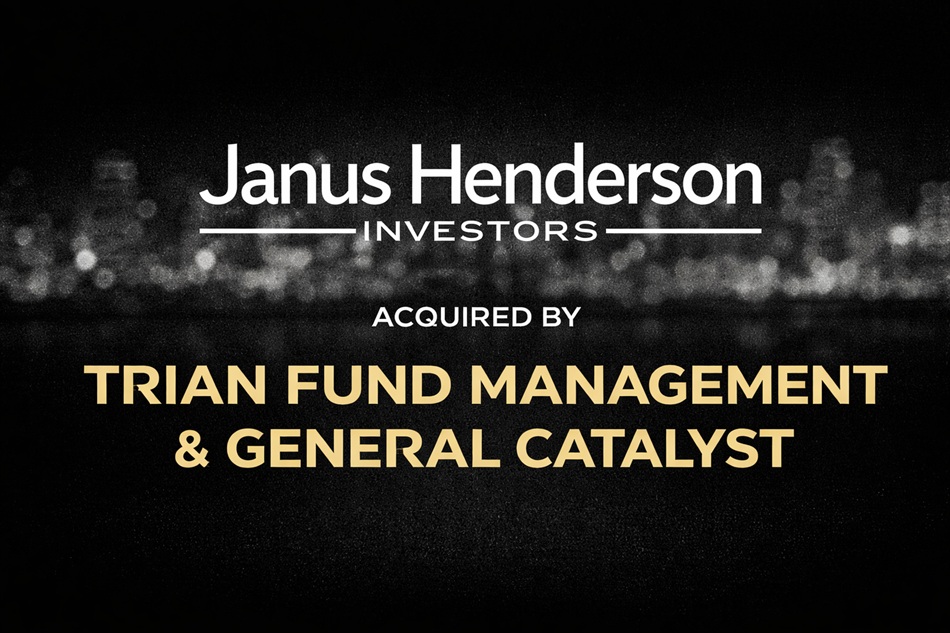
Janus Henderson has agreed to be taken private by Trian Fund Management and General Catalyst in an all-cash transaction priced at $49 per share. The deal values the firm at approximately $7.4 billion and represents a 6.5 percent premium to the prior close, with closing expected in mid-2026 subject to regulatory approvals.
The transaction caps years of involvement by Trian, which first invested in Janus Henderson in late 2020 and already holds two board seats. During that period, the company’s shares roughly doubled, reducing execution risk and signaling that the deal reflects long-term positioning rather than a sudden takeover.
Why this deal matters
The acquisition comes as active managers face mounting pressure from low-cost passive products and rising operational demands. Clients increasingly expect near real-time reporting, deeper risk analytics, and smoother digital onboarding, all of which require sustained technology spending that can weigh on public-market margins.
Private ownership offers flexibility. Without quarterly earnings pressure, owners can invest in systems, distribution tools, and talent over multi-year horizons. That shift has made asset managers with diversified products and global reach increasingly attractive to long-term private capital.
What the buyers are targeting
Trian’s approach centers on governance discipline and operating efficiency, particularly in platform simplification and cost alignment. In asset management, those changes often translate into faster reporting, better service quality, and stronger consultant relationships, which directly influence asset flows.
General Catalyst’s involvement highlights the growing link between technology and distribution. As asset management becomes more service- and data-driven, firms that fail to modernize reporting and analytics risk losing mandates, regardless of investment performance.
Broader industry implications
The deal underscores a wider consolidation trend across global asset management. Managers with exposure to fixed income, multi-asset strategies, and alternatives remain better positioned to defend fees as traditional active equity faces sustained pressure.
Institutional investors, private banks, and family offices continue to favor platforms that combine scale with operational reliability. As a result, transactions like this are likely to continue as private capital looks to reshape how asset managers operate and compete.
FAQ: Janus Henderson acquisition by Trian and General Catalyst
These questions address pricing, timing, strategy, and what the deal can mean for allocators and stakeholders.
What is the value of the Janus Henderson acquisition?
The transaction values Janus Henderson at approximately $7.4 billion.
Who is acquiring Janus Henderson?
Trian Fund Management and General Catalyst are acquiring Janus Henderson.
What is the agreed price per share?
The agreed price is $49 per share in cash.
What premium does the offer represent?
The offer represents a 6.5% premium over the prior market close.
When is the deal expected to close?
The deal is expected to close in mid-2026, subject to regulatory approvals.
Is this a cash deal or a stock deal?
This is a full cash deal at $49 per share.
Has Trian been involved with Janus Henderson before the deal?
Yes. Trian has been an investor in Janus Henderson since late 2020.
Does Trian have board representation?
Yes. Trian has two representatives on Janus Henderson’s board.
Who is the CEO of Janus Henderson in this transaction?
Ali Dibadj remains Chief Executive Officer.
Why do buyers take an asset manager private?
Buyers take an asset manager private to invest over multiple years without quarterly market pressure.
What areas did the buyers highlight for investment?
The buyers highlighted investment in people, technology, and clients.
Does the deal change client ownership of assets?
No. Client assets remain segregated from the asset manager’s corporate balance sheet.
Will institutional mandates automatically change because of the acquisition?
No. Mandates do not automatically change, but many allocators may review governance after an ownership change.
Does this acquisition confirm an industry trend?
Yes. It confirms that consolidation is increasing in global asset management.
Why does technology matter so much for asset managers now?
Technology matters because clients demand faster reporting, stronger risk analytics, and smoother onboarding.
Why is Luxembourg mentioned in discussions about global asset management?
Luxembourg is a major hub for cross-border fund structuring and distribution in Europe.
What is the main execution risk in an asset management acquisition?
A key execution risk is losing investment talent, which can affect performance and client retention.
Did the announcement include planned workforce reductions?
No workforce reductions were announced in the transaction summary.
How did the market react to the announcement?
Janus Henderson shares rose more than 3% after the news.
What is the simplest takeaway for investors following the sector?
The simplest takeaway is that scale, technology, and client trust are driving consolidation in asset management.
Glossary: asset management, assets, and platforms
This glossary explains common terms used in global asset management and platform acquisitions.
Asset manager
An asset manager invests money on behalf of clients under a mandate, a fund prospectus, or a discretionary agreement.
Assets under management (AUM)
AUM is the market value of client assets managed by a firm across funds and mandates at a point in time.
Active management
Active management aims to outperform a benchmark through security selection, allocation, and risk management.
Passive management
Passive management tracks an index and typically charges lower fees than active strategies.
UCITS
UCITS is a European fund framework designed for cross-border distribution under regulated rules and investor protections.
Alternative investment fund (AIF)
An AIF is a regulated fund category often used for private credit, private equity, real assets, and other alternative strategies.
Private credit
Private credit refers to non-bank lending strategies, often to companies or projects, with negotiated terms and less public pricing.
Infrastructure assets
Infrastructure assets include energy, transport, utilities, and digital networks that can produce long-duration cash flows.
Real assets
Real assets include real estate, infrastructure, commodities exposures, and related strategies used for diversification and inflation sensitivity.
Multi-asset strategy
A multi-asset strategy invests across asset classes, often combining equities, fixed income, and alternatives to target a risk outcome.
Fee compression
Fee compression is the long-term trend of declining management fees due to competition, passive growth, and scale pricing.
Distribution
Distribution is how an asset manager wins clients, including consultants, private banks, platforms, and institutional channels.
Operating leverage
Operating leverage is margin improvement from scale when costs grow slower than revenues, often driven by shared platforms.