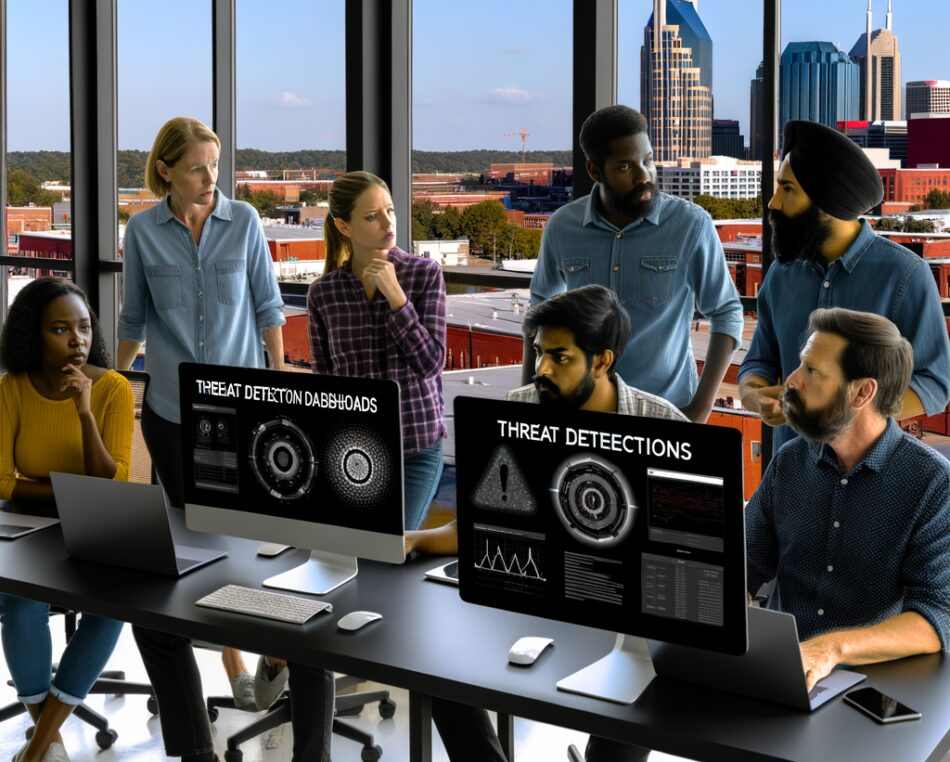
Nashville, Tennessee, is rapidly solidifying its position as a rising node in the U.S. cybersecurity and information security startup landscape. The city’s reputation as a healthtech capital is now complemented by a new wave of cyber and infosec innovation, exemplified by startups like Phosphorus Cybersecurity and Station70. With nearly $70 million in recent VC investment funneled into local startups, Nashville is emerging as a destination for founders and investors eager to address the complex challenges of zero trust, threat detection, SIEM, and identity management. For a global overview of technology investment and innovation trends, visit the Damalion blog.
Unlike traditional coastal strongholds, Nashville’s cybersecurity sector is differentiated by its synergy with healthtech, operational technology (OT), and public sector regulatory trends. Startups here are not only tackling next-generation digital threats but also aligning with Tennessee’s state-led push for robust cyber frameworks in government and critical infrastructure. This article explores the leading players, investment patterns, and the regulatory climate shaping Nashville’s cybersecurity ecosystem in 2024 and beyond.
Key Startups Defining Nashville’s Cybersecurity Landscape
Phosphorus Cybersecurity: Securing the Internet of Things (IoT) at Scale
Phosphorus Cybersecurity Inc., led by CEO Chris Rouland with co-founders Rebecca Rouland (CFO) and Earle Ady (CTO), is a standout in the Nashville infosec scene. Since relocating its headquarters to Nashville, Phosphorus has raised approximately $65 million, including a $27 million Series A2 round in December 2023 and a prior $38 million Series A in 2022. Investors include Evolution Equity Partners, SYN Ventures, and MassMutual Ventures.
The company’s platform delivers unified security management for xIoT (extended IoT, OT, IIoT, and IoMT) environments. By providing automated discovery, remediation, credential and firmware rotation, and vulnerability management for fleets of connected devices, Phosphorus is enabling enterprises—especially those in critical infrastructure and healthcare—to implement zero trust architecture and manage their cyber-physical systems more securely. Their approach addresses the urgent need for visibility and protection in environments where traditional endpoint solutions fall short. Learn more about Phosphorus.
Station70: Web3 Security and Enterprise Resilience
Station70, co-founded by Adam Healy (CEO) and Dr. Adam Everspaugh (CTO), closed a $5 million seed round in March 2024 with investors such as Blockchain.com Ventures, Boldstart Ventures, and Cyberstarts VC. Station70’s focus is the protection of digital assets and Web3 infrastructure, providing disaster recovery, wallet-agnostic key backup/recovery, Web3 firewalls, and enterprise identity solutions. Their platform emphasizes zero trust and is rigorously audited, including penetration testing, cryptography reviews, and SOC 2 compliance—critical for regulated industries and organizations handling sensitive digital assets.
As blockchain and cryptocurrency adoption accelerates, Station70’s approach to cybersecurity for decentralized systems positions Nashville at the forefront of innovation in digital asset protection. The company’s presence is also a signal of the local ecosystem’s appeal for next-generation security startups. More about Station70.
ViNIL: Identity Security in the Age of Deepfakes
While not a traditional cybersecurity startup, ViNIL (Voice, Identity, Name, Image and Likeness), co-founded by Charles Alexander, Jeremy Brook, and Sada Garba, addresses a fast-growing information security concern—deepfake content. The platform enables artists and celebrities to verify and certify AI-generated content using their likeness, empowering rights holders to track and validate deepfake usage. Though funding details are not public, ViNIL’s emergence in Nashville highlights the city’s role in the broader infosec debate around digital identity, content authentication, and the intersection of cybersecurity with the creative industries.
Investment Trends and Ecosystem Growth
Although Nashville’s cybersecurity ecosystem is still maturing compared to larger U.S. markets, recent funding activity demonstrates its acceleration. Phosphorus and Station70 alone have collectively raised about $70 million since 2022, with local startups generally attracting early- and growth-stage rounds in line with national averages—seed rounds of $3–6 million and Series A rounds of $12–25 million are typical.
This traction is drawing attention from national and international investors seeking exposure to verticals like IoT, healthcare, and digital asset security. The city’s talent pool, historically concentrated in healthtech, is increasingly cross-pollinating into cyber and infosec. As highlighted by Damalion’s coverage of ecosystems such as Boston’s cybersecurity startup ecosystem, regional specialization and public-private partnerships are a hallmark of emerging U.S. hubs.
Regulatory and Government Trends: Opportunity for Startups
Tennessee’s state government, through its official portal and agencies like Strategic Technology Solutions (STS), is investing ARPA funds to enhance cybersecurity across government and public infrastructure. The implementation of the NIST Cybersecurity Framework, with oversight from the Governor’s Cybersecurity Advisory Council, creates fertile ground for local startups to provide solutions for government procurement, CMMC compliance, and critical infrastructure protection.
For cybersecurity founders and investors, this regulatory climate is a catalyst for partnerships and pilot deployments, echoing trends seen in other innovation clusters such as Los Angeles’ cybersecurity startup ecosystem. Nashville’s proximity to influential sectors—healthcare, music, logistics—also opens unique vertical opportunities for cyber solutions tailored to regulated industries.
Nashville’s Distinctive Edge: HealthTech and Cybersecurity Synergy
Nashville’s legacy as a healthtech capital provides a foundation for cybersecurity startups to innovate at the intersection of data privacy, critical infrastructure, and compliance. Startups here are uniquely positioned to address the security needs of hospitals, medical device manufacturers, and insurers, where SIEM, identity management, and zero trust frameworks are essential. As new threats emerge—from ransomware to deepfake-enabled fraud—the city’s ecosystem is poised to deliver solutions that balance technological sophistication with real-world applicability.
Damalion supports international startups (from pre-seed, seed, series, A, B, C, growth stage and mid-caps) entering the U.S. market with corporate structuring, fundraise, customer development expertise, regulatory compliance, and operational guidance tailored to the needs of growing companies. We also advise international investors, family offices navigating the U.S. startup ecosystem and real estates with deal sourcing and strategic advisory.