In 2026, Austin’s FoodTech and AgriTech ecosystem is defined by its blend of hyperlocal innovation and digital transformation. Fourteen funded food and beverage startups have collectively secured $283 million, according to Seedtable, with standout ventures in microgreens, aquaponics, and supply chain platforms. This specialized vertical is modest compared to Texas’s $41.5 billion in overall tech funding, yet it signals a growing opportunity for international investors and operators navigating Austin’s dynamic startup environment. For in-depth coverage of U.S. innovation corridors, explore the Damalion blog.
While national agtech funding has cooled since its 2021 peak, Austin’s food systems entrepreneurs and university-backed accelerators are building resilient, tech-first business models from the ground up. This article examines the latest trends, key startups like ChefPax, Fieldcraft, and Crisp, and the ways in which global investors and founders can capitalize on Austin’s unique food innovation landscape.
Hyperlocal, Tech-Driven Food Production: ChefPax and Crisp
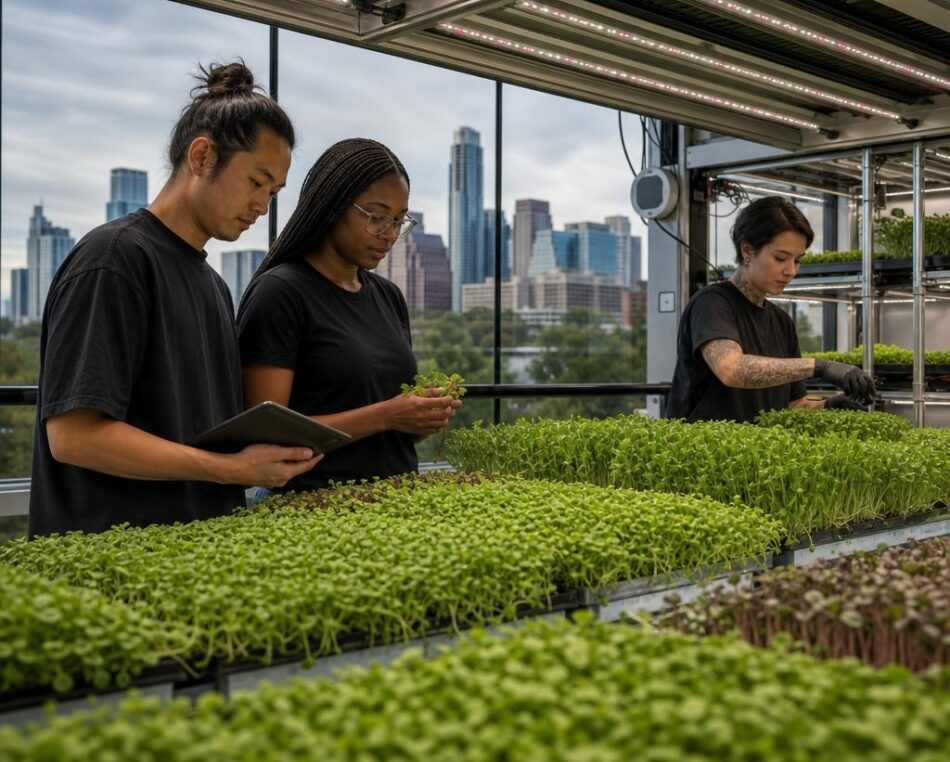
The Austin foodtech scene is defined by a focus on sustainability, local impact, and smart technology. ChefPax, founded by a former software engineer, operates a sensor-driven microgreens farm. By leveraging data and real-time environmental controls, ChefPax optimizes quality and consistency, delivering over 23 varieties of microgreens to local chefs and markets within 24–48 hours. The business model addresses Austin’s historically fragmented supply chains, emphasizing freshness, traceability, and rapid response to demand fluctuations. Though ChefPax remains independently operated with no disclosed external funding, its approach illustrates the city’s grassroots, tech-enabled agricultural innovation.
Another example is Crisp, which runs a closed-loop aquaponics system in Austin. Their model integrates organic greens and tilapia in a purified ecosystem, reducing waste and eliminating contaminants. By raising both high-nutrition produce and sustainable protein, Crisp addresses consumer demand for transparency and ecological responsibility. Despite operating without publicly disclosed venture funding, Crisp exemplifies the city’s commitment to holistic, resource-efficient food systems.
Digital Supply Chains and Marketplaces: Fieldcraft’s Platform Approach
While many Austin foodtech startups are early-stage, digital supply chain solutions are beginning to scale. Fieldcraft has built a B2B marketplace and digital supply chain platform connecting producers with buyers. The venture-backed company serves over 4,000 buyers, streamlining marketing for producers and offering buyers a modern, transparent e-commerce experience. Fieldcraft’s focus on transparency and efficiency reflects broader investment trends: as global agtech capital consolidates into fewer, larger deals, Austin’s startups are leveraging digital infrastructure to compete regionally and nationally.
The adoption of digital platforms like Fieldcraft’s underscores Austin’s transition from farm-to-table ethos to farm-to-digital-table realities. These innovations are especially relevant for investors seeking operationally lean, scalable business models in food and agriculture.
Institutional Support and the Austin Innovation Corridor
Robust institutional support anchors Austin’s foodtech and agritech ecosystem. The University of Texas Austin’s Austin Technology Incubator (ATI) hosts a dedicated sustainable food-systems cluster, nurturing startups focused on agricultural production, logistics, and resource efficiency. The UT Food Lab (TFL) further accelerates ecosystem growth through research, student-led ventures, and the Food Challenge Prize, with backing from industry partners like Whole Foods.
Local investors and accelerators, such as the Austin Foodshed Investors network, play a vital role in guiding sustainable food companies through growth capital and mentorship. As a result, Austin’s Innovation Corridor is not only a hub for SaaS and mobility but is increasingly recognized for its contribution to next-generation food systems. For a broader perspective on the city’s startup surge, see Austin’s SaaS Surge: Inside the Innovation, Investment, and Growth of Texas’s Software Powerhouse.
Investor and Regulatory Trends: Navigating the U.S. FoodTech Market
Following the 2021 agtech funding peak, the national landscape has shifted toward investor caution and strategic consolidation. In early 2026, global agtech startups raised $1.4 billion across 187 deals, down substantially from prior years. This environment favors startups with clear differentiation, robust technology, and scalable distribution models-attributes increasingly present in Austin’s foodtech sector.
International investors must also navigate the U.S. regulatory environment, including FDA and USDA oversight for food production, labeling, and distribution. Strategic entry requires expertise in regulatory structuring, consumer packaged goods (CPG) partnerships, and understanding of local market nuances. Damalion supports founders and investors through these complexities, enabling successful U.S. market entry and operational scaling. For a deeper dive into local sector intersections, read Austin’s FoodTech & AgriTech Startups: Where Restaurant Financing, Alternative Proteins, and Sustainable Packaging Intersect.
Damalion supports international startups (from pre-seed, seed, series, A, B, C, growth stage and mid-caps) entering the U.S. market with corporate structuring, fundraise, customer development expertise, regulatory compliance, and operational guidance tailored to the needs of growing companies. We also advise international investors, family offices navigating the U.S. startup ecosystem and real estates with deal sourcing and strategic advisory.