
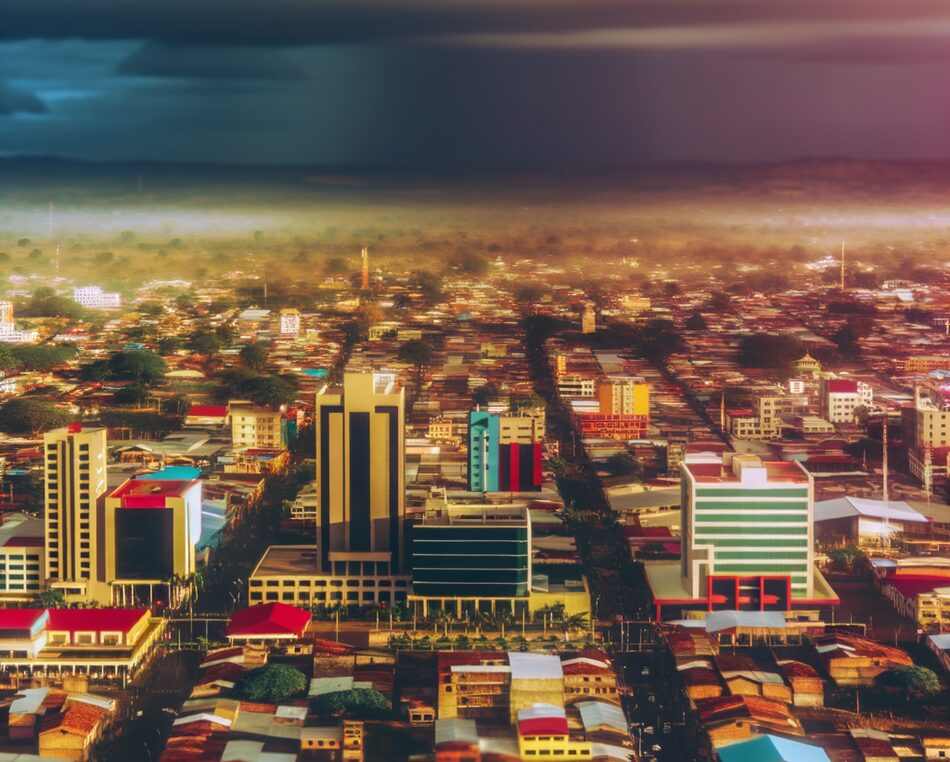
Why Masaya Is Gaining Investor Attention in 2026
Investor sentiment toward this market has grown noticeably in the past year, fueled by new infrastructure projects and evolving foreign investment policies. The city’s proximity to Managua, its vibrant artisan economy, and an emerging tourism sector have caught the eye of international buyers looking for value beyond traditional hotspots. Notably, the launch of several large-scale, Chinese-backed developments in the country during early 2026 has improved regional infrastructure, supporting both logistics and utility reliability for property owners.
Real estate prices in the city remain significantly lower than in the capital, with buildable land starting at $30 per square meter in peripheral neighborhoods and residential homes in gated communities available from $75,000. Rental yields are currently averaging 6-8% for well-located properties, driven by demand from both domestic professionals and short-term visitors exploring Nicaragua’s cultural heartland. These figures have prompted family offices and entrepreneurs to assess opportunities for both buy-to-let and long-term appreciation.
Foreign Ownership Rules and Registration Process
International investors face no outright restrictions on ownership of private real estate in the country, including in the city, except within border and coastal zones where special permits may be required. Transactions must be conducted through a locally licensed notary, and all property transfers are registered with the Public Registry. The registration process typically takes 30 to 45 days, assuming clear title and absence of liens. Damalion facilitates the entire process for clients, from due diligence on title to coordination with notaries and registry offices, ensuring compliance with local regulations.
Foreign buyers must obtain a tax identification number (NIT) before purchase, which takes 3-5 business days. All funds for property acquisition must be sourced through a Nicaraguan bank account, requiring KYC procedures and proof of source of funds. Damalion’s local team supports account opening and documentation, minimizing delays linked to anti-money-laundering checks.
Taxation and Ongoing Costs
Real estate transfers in the country are subject to a 1-3% transfer tax, calculated on the higher of the sale price or municipal cadastral value. Annual property tax (Impuesto de Bienes Inmuebles) in Masaya is levied at 1% of the municipal-assessed value, with discounts of up to 10% for prompt payment. Rental income earned by non-residents is taxed at a flat rate of 15%, and expenses directly related to the property can be deducted if properly documented and filed.
Capital gains tax applies only to gains realized through resale within four years and is calculated at 10%. There is no inheritance tax on property assets in the country, making it attractive for long-term wealth planning. For investors prioritizing tax efficiency, local SPVs can be set up to hold assets, reducing exposure to personal reporting requirements.
Residency-by-Investment: An Added Advantage
The country maintains a passive residency program for foreign investors purchasing real estate worth at least $100,000. This program grants a renewable residency permit valid for up to five years, and can be extended to immediate family members. Applicants are required to demonstrate a clean criminal record and proof of investment, with processing times of 60-90 days. Property acquired through the residency route can be rented or sold without restriction.
Many international investors use this pathway both for asset diversification and as a contingency plan, leveraging Nicaragua’s low cost of living and favorable personal tax regime. Damalion supports clients through each stage of the residency process, including document authentication, translation, and submission to immigration authorities.
Risks, Practical Considerations, and Market Outlook
Title irregularities remain the most significant risk for buyers in the city, especially with older or inherited land. It is crucial to conduct exhaustive title checks and obtain municipal clearance certificates prior to closing. Earthquake and volcanic activity are also relevant factors for insurance and construction standards in the region, with policies priced at 0.8-1.5% of property value annually.
The country’s currency peg to the US dollar has helped stabilize transaction values, even as inflation ticked up to 5.1% in 2025. Liquidity in the resale market can be limited for high-end properties, so investors are advised to plan for holding periods of at least 5 years to optimize returns. However, ongoing infrastructure improvements, especially in water and energy supply—driven by recent foreign investment—are expected to boost local property demand and support appreciation.
Final Thoughts for 2026 Investors
Masaya’s real estate sector is evolving rapidly, offering international buyers a mix of affordability, growth potential, and residency incentives unique within the country. Investors who partner with experienced advisors such as Damalion can navigate local legal and tax frameworks smoothly, unlocking secure pathways to asset acquisition and personal relocation. As this market continues to benefit from foreign-backed infrastructure and a more open investment climate, opportunities are emerging for those willing to act decisively and with due diligence.
Damalion supports international investors, entrepreneurs, and family offices establishing and structuring their business in Nicaragua. Contact your Damalion experts now.