
WE ARE
AN INDEPENDENT MANAGEMENT CONSULTING FIRM
– Dedicated to excellence –
Our Independent Expertise

COMPLIANCE & RISK
Our experts leverage their solid regulatory knowledge to optimize your compliance management and operational risks

GLOBAL ADVISORY
As we put your needs first, our independency and transparency elevates your experience at its best

CORPORATE STRUCTURING
Our experts anticipate your future events to offer you effective and tailor-made structures that work

COMPANY MANAGEMENT
Our independent directorship & governance brings you unbiased positions without influence to keep your business confident
Private Enterprise
Solo or family business entrepreneurs benefit from our experience for organic growth and sustainable value creation
Funds
For your fund projects, dedicated experts leverage their key knowledge and bespoke experience to keep your fund lifecycle on the right path
Institutions
At Damalion’s, we take pride to support institutions in their commitment to make our community better through innovation culture
Family Offices
Critical thinking is our DNA and our experts stand with you to maintain your family interests on lasting success path
360° Independent expertise
Damalion is based on the principle that whatever the way of organizing a structure, with or without human intervention, this organization will experience sooner or later critical pain points which will impact negatively its business model or its existence per se.
And, this organization will recover fully or not or will simply disappear. Today, intensive regulations challenge habits and the existing architecture of any entity, locally and globally.
Conflict-free client service
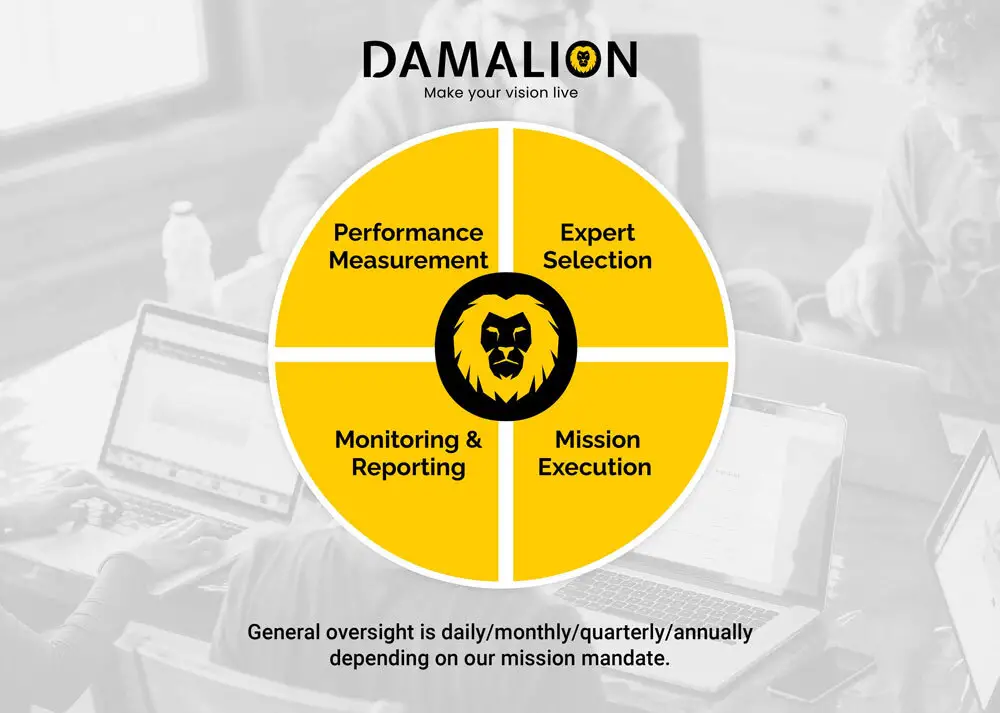
How we manage conflicts of interest upon expert mandates?
Experts commit on ethics beyond their legal obligations set by mandates.
This commitment applies before mandate acceptance, during and after mandate execution.
Experts are also invited to report and refuse any mission that may not comply with their own internal code of ethics, aside of what the legal requirements set by their profession.
Processes, policies and procedures
Your regulatory risk exposure may be heightened by, for example:
– Poor or outdated risk management procedures and controls
– Failure to follow established risk management procedures and controls
– even inadequate training on roles, responsibilities, and obligations.
These situations can occure faster than anyone even the most knowledgeable internal unit may think.
Our independent experts will keep you upgraded on adequate management of your growing responsibilities such as:
– Having appropriate internal control and information systems
– Proving that they operate in a safe and sound manner
– Assessing how good your policies communicate your Governance guidelines to achieve your objectives and implement your requirements.
– Controling effective performance of your processes, tracking potential deficiencies that may impact negatively your level of services.
The goal of such mission will be to continously improve your organization regarding the following assets :
– communicating a clear line of authority and responsibility for monitoring internal stakeholders about respect of policies
– getting directly actionable reports to be timely and accurate so your strategic tactics may be adjusted if necessary
– assessing procedures to protect and manage your assets
– raising your compliance with the laws and latest regulations as a competitive advantage.
Regulatory compliance
Understanding our approach may ensure you that Damalion is the right partner to offer you an elastic appropriate expertise.
We identify and qualify your needs to be sure that the required level of expertise is proportionate to the level of regulatory stress you must handle with.
It’s helpful not only to provide you for a cost-effective independent line of defense but also to nurture your organization’s efficiency.
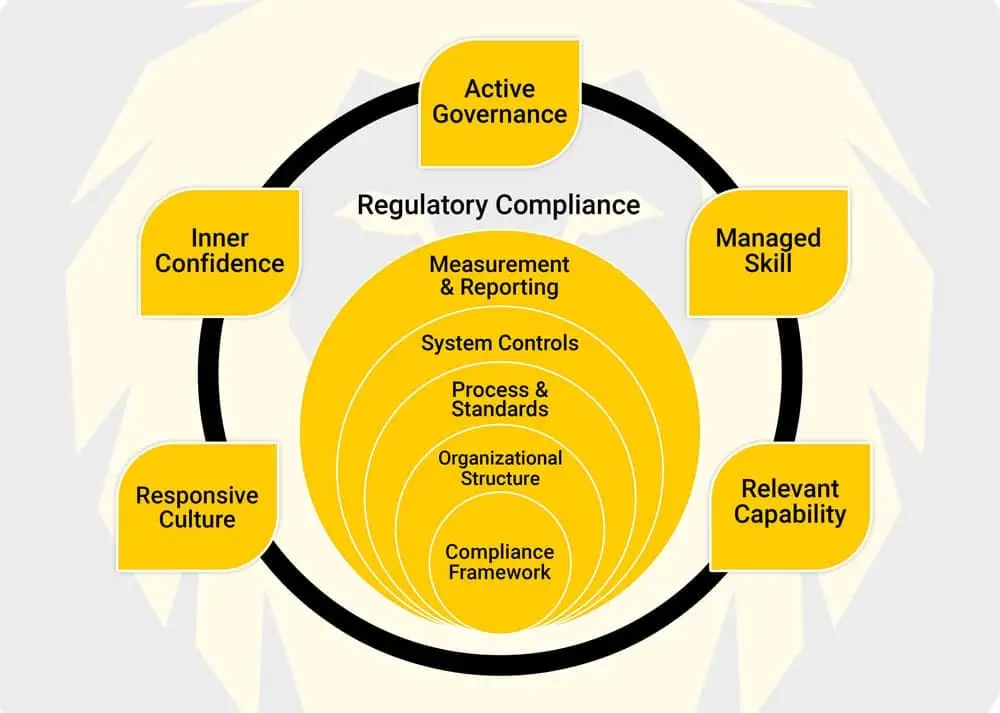
Our value proposition is to bring you our expertise as a driving force behind your steady growth and our trust as a source of your sustainable success.
Damalion offers you access to vetted independent consultants who use their past operational experiences, positive or negative, their capital knowledge to deliver outstanding outcomes you need to achieve your business objectives.
We focus on “Best practices” and are engaged in a continuous improvement culture to share with our clients the risk and red flags to mitigate. Unbiased methodology We get an analytical understanding of your needs and your global environment to assess your strategic objectives, design a tactical roadmap so our mandated experts can coordinate with your own teams to deploy concrete and effective results. Let’s talk about your projects…

We bring a commitment driven by results and growth. We share the company ambition held by a deep strategy understanding, a tactical roadmap design, team involvement, and coordination around concrete and affordable goals.
Let’s talk about your projects.
Want to know more about value creation with Damalion?
Damalion offers you from bespoke advice provided by directly operational experts in the fields that challenge your business.
We advise you to give information at its best, so we can qualify your demand and revert to you under the next 8 hours.
Featured news and insights

Luxembourg RAIF: Formation, Tax, and Structuring for Reserved Alternative Investment Funds
The Luxembourg RAIF provides a flexible, efficient fund structure for real estate, private equity, and debt strategies.

Luxembourg company formation: legal structures, setup steps, and regulatory requirements
Discover Luxembourg company formation: legal structures, incorporation steps, substance, and compliance for robust, tax-efficient business setup.

SCSp for Private Equity & Alternative Funds | Luxembourg
The Luxembourg SCSp (SLP) offers flexible, tax-transparent fund structuring for private equity, venture capital, and alternative assets.