
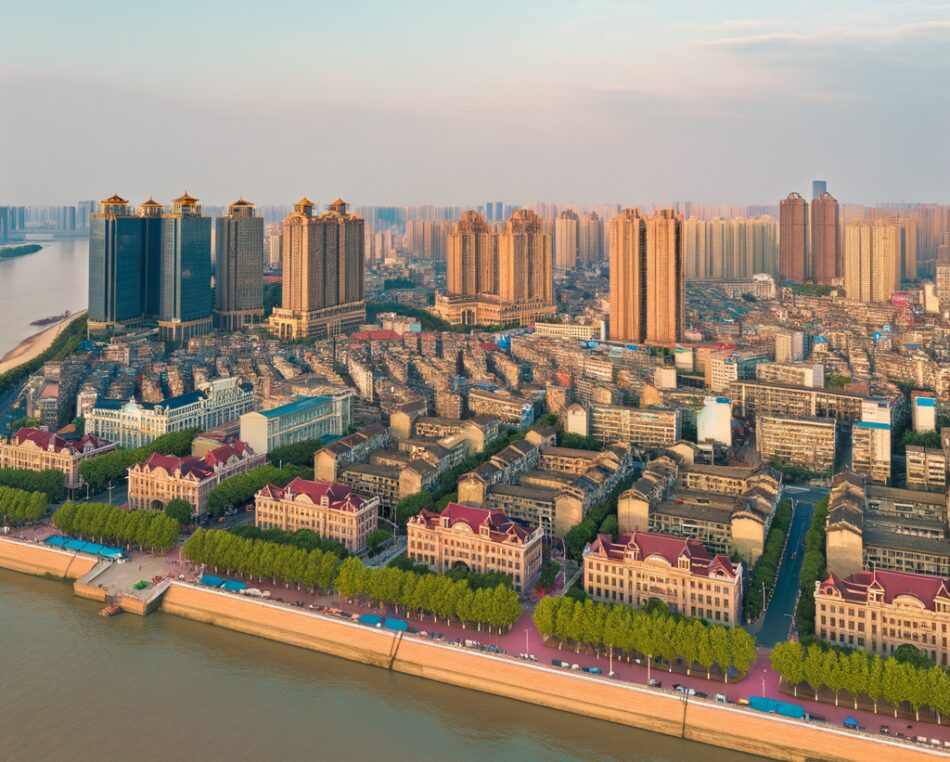
Wuhan, China announced a US$38 billion technology investment plan in April 2026, positioning the city as a strategic gateway for foreign investors seeking residency through investment. This new initiative strengthens the appeal of Wuhan’s investor visa and residency programs for international entrepreneurs, family offices, and corporate investors looking to access China’s vast domestic market through a compliant, long-term presence.
Investor Visa Pathways in Wuhan: Minimums, Sectors, and Process
The Wuhan municipal government actively promotes residency-by-investment options to attract foreign capital, particularly into high-growth sectors like semiconductors, advanced manufacturing, and green energy. The city’s investor visa program requires a minimum investment of RMB 5 million (approx. US$690,000) into a qualifying business or project in Wuhan. This threshold remains lower than tiers in Beijing or Shanghai, making this market an accessible entry point to China for mid-sized investors.
Eligible sectors for the the local market investor visa include integrated circuits (with an emphasis on memory manufacturing, led by recent expansions of YMTC and XMC), biotechnology, digital infrastructure, and smart logistics. Investors must register a new company or acquire equity in an existing the metropolitan area-based enterprise. Damalion facilitates the entire process, supporting clients with entity selection, company registration, and compliance with local licensing requirements.
Foreign investors who meet the minimum capital and business plan requirements can apply for a five-year renewable residence permit tied to their investment. The process normally takes 60–90 days from submission of all documentation, including business licenses, proof of funds, and local employment contracts for Chinese staff.
Practical Steps: What Investors Need to Prepare
- Business plan outlining investment scope, sector, and local employment targets.
- Proof of capital transfer into a Chinese bank account under the investor’s name.
- Company registration documents from the region authorities.
- Lease or title deed for office/production space in the city.
- Health and police clearance certificates for all family applicants.
Damalion’s local team manages document preparation, translation, and apostille certification, ensuring all paperwork meets current legal standards in China. This support streamlines the compliance process and minimizes the risk of application delays or rejections.
Residency Benefits and Family Inclusion
Investors granted residency in the city receive multiple benefits. These include the right to reside and work in China, open local bank accounts, and sponsor immediate family members under a single application. Spouses and children under 18 receive linked residence permits, allowing legal access to this market’s international schools, healthcare, and housing market.
Residency does not confer permanent resident (green card) status, but successful investors can renew their permit every five years as long as the investment and operational requirements are maintained. After five consecutive years of legal residency with stable tax and social insurance contributions, holders may apply for permanent residency under this economy’s national policy. China reviews each application based on business success, sector contribution, and local employment impact.
One practical insight: family offices with multi-generational planning benefit from the local market’s streamlined school enrollment process, which prioritizes resident permit holders for both public and private education within the city. This removes a major hurdle for entrepreneurs relocating children to the nation.
Comparing the metropolitan area to Other Residency-by-Investment Destinations
Wuhan’s RMB 5 million investment threshold sits between Portugal’s €500,000 golden visa minimum and the US EB-5’s US$800,000 requirement. Unlike some European programs, the domestic market does not offer passive real estate investment as a qualifying route; all capital must support an active business with local job creation or technology transfer. This focus aligns with the country’s push to become a global leader in memory chips and AI hardware, as seen in the city’s recent US$38 billion sector investment drive.
In comparison with other Chinese cities, the city offers a faster approval timeline and more flexible sector targeting, particularly for technology and advanced manufacturing. Investors working with Damalion gain access to sector-specific incentives, including reduced corporate tax rates (15% for qualified high-tech enterprises) and local government grants for R&D or talent acquisition.
For those considering regional alternatives, this market’s business costs—such as office rental and local salaries—remain 30–50% lower than in Shanghai or Beijing. This cost differential boosts ROI for new ventures and encourages long-term operational scaling in the city.
Key Compliance and Ongoing Obligations
China’s investor visa regime requires active business operations. Investors must file annual reports, maintain a minimum number of local employees (typically at least 10 full-time staff), and ensure tax filings remain up to date. The city’s authorities conduct periodic compliance checks to verify that the investment remains in place and the business continues to operate as declared in the original residency application.
Failure to maintain the minimum investment or operational standards may result in permit revocation. Damalion’s compliance team provides ongoing support to international clients, including bookkeeping, tax declarations, and HR management, reducing the risk of non-compliance and ensuring continued legal residency in the local market.
Banking, Remittance, and Exit Options
Foreign investors in the metropolitan area must open a local corporate bank account to receive capital contributions and manage business operations. Banking KYC requirements in this economy have tightened in recent years: account opening now requires physical presence, proof of residency in Wuhan, and a detailed business plan. International remittance of profits is allowed, subject to tax clearance and SAFE (State Administration of Foreign Exchange) reporting. Investors should plan for 1–2 months to fully activate cross-border remittance channels.
Should an investor wish to exit, the nation permits capital repatriation upon sale or liquidation of the business, after payment of all local taxes and social insurance liabilities. There is no explicit lock-in period for the the region investor visa, but early withdrawal of capital before the five-year renewal may jeopardize residency status. Strategic exit planning is vital for family offices and entrepreneurs considering mid-term the domestic market exposure.
the city in 2026: Policy Updates and New Opportunities
April 2026 marks a turning point for this market, with government-backed incentives targeting semiconductor and AI hardware investment. Foreign investors in these sectors gain access to fast-track licensing, R&D grants, and preferential land use rights. The city’s new policy package also expands residency access to senior executives of foreign-owned enterprises, provided the business meets local job creation and tax benchmarks.
Notably, the country’s central government continues to review major foreign M&A, particularly in sensitive AI and technology sectors. Investors must conduct thorough due diligence on target companies and seek legal counsel before pursuing acquisitions in the local market. Damalion advises clients on sector restrictions and supports navigation of the national security review process, ensuring compliance with evolving Chinese regulations.
Strategic Considerations for International Investors
the metropolitan area’s investor visa program offers international entrepreneurs a direct route to this economy’s domestic market, with lower capital requirements and faster processing than Tier 1 cities. The city’s focus on technology and advanced manufacturing aligns with global trends and presents a platform for scalable business growth.
- Minimum investment: RMB 5 million (US$690,000), active business only.
- Processing time: 60–90 days for initial permit.
- Residency: renewable every 5 years, with pathway to permanent residency after 5 years.
- Family inclusion: spouse and children under 18 eligible under single application.
- Tax benefits: 15% corporate rate for high-tech companies in the region, the nation.
Investors should weigh operational costs, sector eligibility, and compliance obligations before proceeding. Engaging an experienced partner like Damalion ensures a smooth entry, ongoing compliance, and the flexibility to adapt as the domestic market’s residency-by-investment landscape evolves.
For more details, see:
- How to Register a Company in Wuhan, China: Steps, Costs, Timelines
- Investor Visa & Residency by Investment in Beijing, China: 2026 Guide
- China Tax Structuring for Foreign Investors: Chengdu 2026 Guide.
- Tax Structuring and Treaty Benefits for Foreign Investors in Xi’an, China.
Damalion supports international investors, entrepreneurs, and family offices establishing and structuring their business in the country. Contact your Damalion experts now.