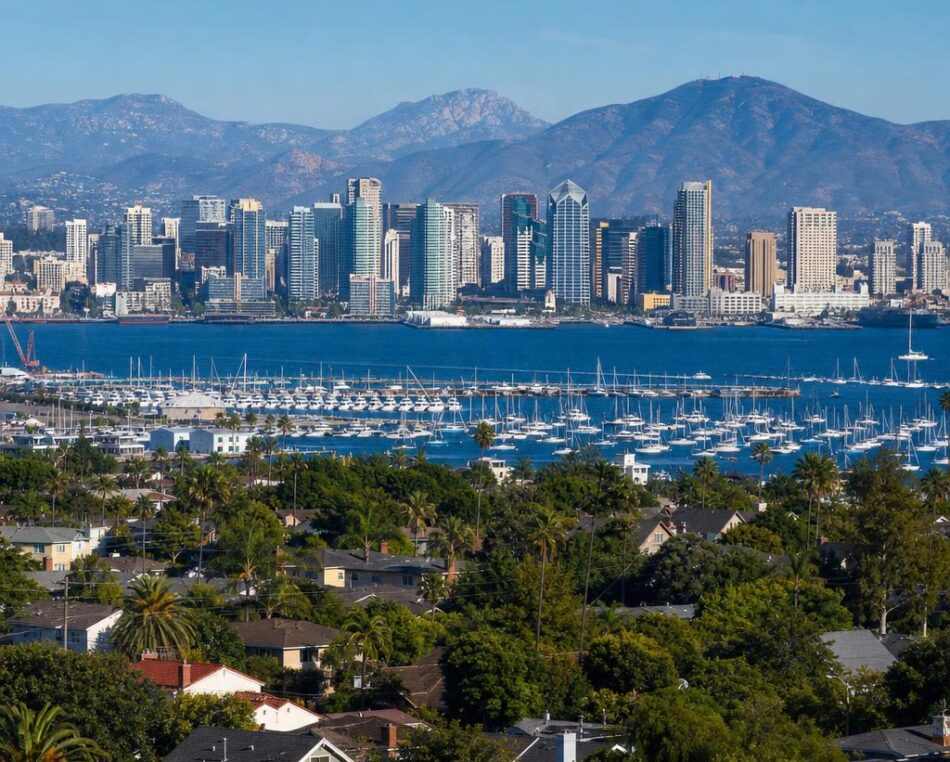
Solar arrays stretching across rooftops, upgraded water systems, and a growing grid for wind energy—these are not distant ambitions in this Pacific city, but realities shaping the investment landscape today. As 2026 unfolds, infrastructure renewal and expansion are at the heart of the region’s economic agenda, attracting international capital with a mix of reliability, innovation, and policy-driven incentives. For global investors, entrepreneurs, and family offices, understanding the current infrastructure landscape is essential to unlocking opportunities in this vibrant coastal market.
Energy & Utilities: Where Investment Flows Now
Infrastructure modernization in this market is accelerating, with utility upgrades and clean energy projects dominating the agenda. In 2026, more than $277 million is being deployed into local water infrastructure upgrades. This push comes as part of a wider strategy across California, with the state targeting over $540 million this year for water projects alone—demonstrating a commitment to both drought resilience and sustainable growth.
Electricity grids, too, are evolving. The state’s regulatory framework now mandates that 50% of retail electricity sales come from renewable sources, challenging utilities and independent power producers to rapidly scale solar and wind capacity. The city’s favorable climate and available land parcels have made utility-scale solar installations particularly attractive. Fast-track permitting processes—averaging 60 days for commercial solar projects—are incentivizing developers and investors alike.
For international backers, navigating the state’s interconnection rules, net metering adjustments, and incentive programs can be complex. Damalion guides clients through California’s technical compliance, manages power purchase agreement (PPA) negotiations, and coordinates with municipal and investor-owned utilities to streamline project launch.
Water, Waste, and Resilience: The 2026 Upgrade Cycle
Water infrastructure is undergoing a historic upgrade cycle. Over $200 million was invested in state-wide water systems during 2025, with allocations rising in 2026. In the city, the focus is on advanced treatment facilities, leak detection technology, and smart meter rollouts—reducing water loss and supporting sustainable expansion. The state now offers expedited permitting for water reuse projects, cutting typical approval times in half to just 90 days.
Alongside water, waste management systems are receiving attention. New regulations require municipalities to divert 75% of organic waste from landfills by 2027, opening new avenues for investment in anaerobic digestion and waste-to-energy projects. These initiatives are supported by state incentives, including grants covering up to 30% of capital costs for qualifying infrastructure.
Investors working with Damalion benefit from streamlined access to compliant corporate structures, efficient licensing, and connections to vetted EPC (engineering, procurement, and construction) partners—critical advantages in a sector where execution speed can determine returns.
Renewables: Solar, Wind, and Beyond
The region continues to set benchmarks for renewable deployment. Solar capacity in the state exceeded 33 GW in early 2026, with utility-scale and distributed generation both scaling rapidly. Rooftop solar remains popular, buoyed by state tax credits and a 15% property tax exclusion for qualifying systems installed before the end of 2027.
Wind energy is also gaining ground, particularly inland and offshore. New projects benefit from streamlined site assessments, with environmental review periods reduced to 120 days for wind installations under 100 MW. The state’s grid operator has prioritized transmission upgrades, allocating $85 million in 2026 to connect new renewable resources to demand centers, including this city and its neighbors.
- Commercial solar: 60-day permitting, 15% property tax exclusion, PPA market access
- Wind projects: 120-day review, transmission support, state grants for grid integration
- Battery storage: Eligible for 20% state investment tax credit, plus federal incentives
For global investors, the challenge is often regulatory complexity and local partnership. Damalion’s team coordinates document preparation, technical feasibility studies, and banking relationships for foreign capital entering California’s renewable sector.
Beyond Energy: Transportation & Urban Infrastructure
Transportation networks are also receiving a significant boost. The state earmarked $540 million in 2026 for road, rail, and public transit upgrades, with a substantial portion supporting coastal and cross-border connectivity. In the city, major projects include light rail extensions and the conversion of bus fleets to zero-emission vehicles, a process now eligible for state grants covering up to 40% of capital expenditure.
Urban infrastructure has not been overlooked. Unique among peer cities, this market’s local government is increasing arts and cultural investment, even as other jurisdictions reduce funding. This is being paired with digital infrastructure improvements, including the rollout of 5G networks and public Wi-Fi in targeted business districts—a move designed to support tech-driven enterprises and foster a vibrant urban core.
Practical Entry Points for International Investors
- Water project participation: Minimum investment size often $2 million, with co-investment options available for foreign partners.
- Renewable project acquisition: M&A opportunities in operational solar/wind assets, typically 8-10% IRR over a 15-year horizon.
- Urban renewal: Joint ventures with local developers for mixed-use and smart city projects, leveraging state and municipal incentives.
Key legal structures for infrastructure investments in California include LLCs, limited partnerships, and REITs. Formation timelines range from two to six weeks, depending on entity type and due diligence requirements. Investors should note that the state imposes a minimum $800 annual franchise tax for LLCs and a progressive corporate tax rate starting at 8.84%.
The 2026 Outlook: Infrastructure and Opportunity
In San Diego, infrastructure is not just a foundation but a growth driver. The city’s focus on renewables, water resilience, and integrated urban systems is creating investable projects with real impact. California’s regulatory environment is complex yet navigable with the right local expertise, and incentives remain robust for early movers in energy, utilities, and digital infrastructure.
Damalion stands ready to assist international investors, entrepreneurs, and family offices in capturing these opportunities—handling everything from entity formation to operational compliance, and providing on-the-ground support for project execution. For those seeking a foothold in one of America’s most forward-looking markets, the time to engage is now.
Damalion supports private equity firms, venture capital investors, and fund managers structuring and optimizing their investments in California. Contact your Damalion experts now.