
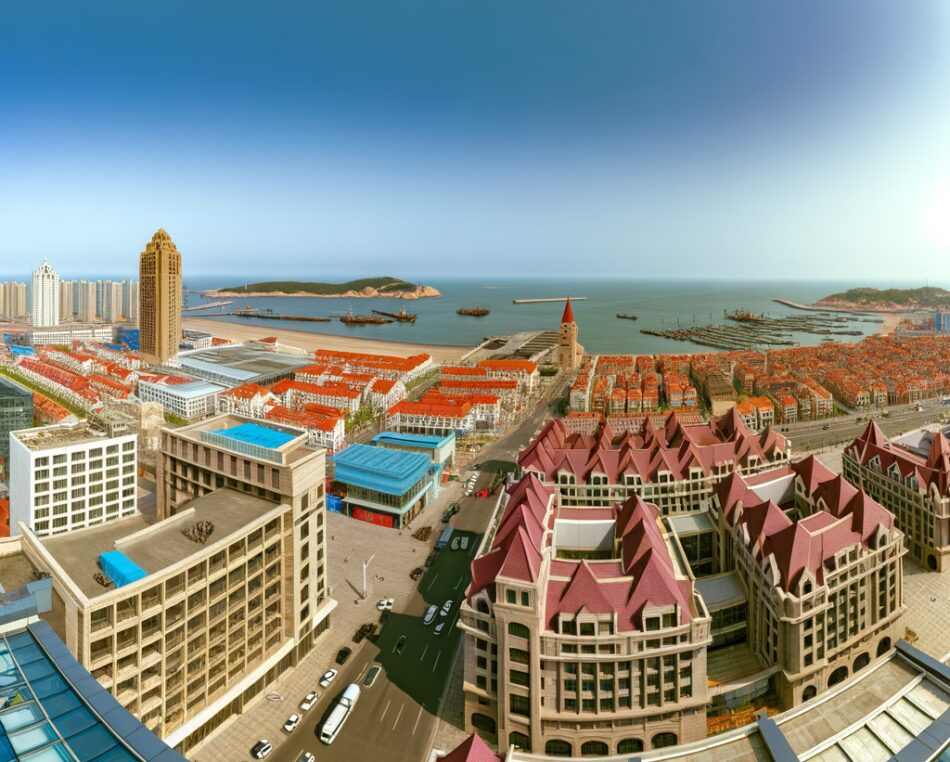
Luckin invested RMB 3 billion in Qingdao, China, to open the world’s largest coffee roasting plant in April 2026, underlining the city’s growing status as a hotbed for industrial and commercial real estate development. As global names channel billions into China’s biopharma and manufacturing sectors, international investors are scrutinizing Qingdao’s property market for both capital appreciation and portfolio diversification. However, foreign buyers face specific restrictions, market quirks, and evolving regulatory landscapes that demand careful navigation.
Foreign Ownership Rules: What International Investors Need to Know
Foreign nationals and entities remain restricted from directly purchasing residential property in Qingdao, as in most of China. The country’s regulations only allow overseas investors to acquire commercial real estate or certain types of industrial property. This limitation has not dampened interest, especially as demand for logistics, manufacturing, and warehousing space rises alongside major foreign corporate investments.
For international buyers considering commercial property, the minimum investment threshold in China stands at USD 1 million for most sectors, with exceptions for certain Free Trade Zones and high-tech projects. Investors must establish a legal entity—typically a Wholly Foreign-Owned Enterprise (WFOE) or a joint venture—to acquire and hold property rights. Damalion facilitates the entire process, from entity setup and registration with Qingdao authorities to licensing and compliance, enabling a seamless market entry for global clients.
In addition, China’s 2026 real estate policies require foreign buyers to demonstrate substantive business operations in the country before purchasing property. The local authorities in Qingdao may request proof of paid-in capital, tax registration, and evidence of active commercial activities. These restrictions are designed to curb speculative inflows and redirect foreign capital toward productive economic sectors.
Market Trends: Supply, Demand, and Pricing in this market
Despite broader national headwinds, the local market’s logistics and industrial real estate markets posted resilience in 2026. While this economy’s overall property investment dropped 11.2% in Q1 2026, this city saw a 4% year-on-year increase in average industrial rent, driven by manufacturing expansion and robust demand from multinational tenants.
Commercial office vacancy in the metropolitan area hovers around 19%, in line with major tier-2 cities, but premium projects near the city’s central business districts command higher rents and lower vacancy rates. Investors should note that new supply pipelines remain strong, especially for logistics parks and business parks in the vicinity of the port and high-tech zones.
The average transaction price for prime commercial property in the region stands at approximately RMB 23,800 per square meter as of May 2026. Industrial land leasing typically involves long-term (30–50 year) land use rights, with annual rents ranging from RMB 90 to RMB 130 per square meter depending on location and infrastructure access. The city government actively promotes foreign participation in industrial clusters, offering tax holidays and expedited permitting for qualified projects.
Impact of Corporate Expansion and Foreign Direct Investment
AstraZeneca’s commitment to invest USD 15 billion in the nation by 2030, with a focus on innovative medicines, and Novartis’ recent USD 480 million expansion, have reinforced the city’s reputation as a magnet for biopharma and advanced manufacturing. These moves have spurred demand for specialized facilities—including R&D centers, GMP-compliant manufacturing plants, and cold chain logistics hubs—creating fresh opportunities for international real estate investors targeting long-term leases to blue-chip tenants.
Additionally, Luckin’s new plant, now the world’s largest coffee roasting facility, highlights the city’s infrastructure advantages and export potential. This has led to a spike in land acquisition applications and a tightening supply of industrial plots near the city’s port zones.
Legal Steps, Taxation, and Compliance for Foreign Buyers
International investors must follow a multi-step process to acquire commercial real estate in the domestic market. The sequence includes:
- Establishing a legal entity (WFOE or joint venture) registered in this market
- Obtaining a business license and registering with the local tax authority
- Securing pre-approval for land or property purchase from the municipal government
- Completing due diligence, contract negotiation, and signing with a notary
- Registering the property rights with the the local market Real Estate Registration Center
Stamp duty on property transactions is 0.05% of the contract value. Value-added tax (VAT) applies at 9% for commercial real estate, with input VAT credits available for qualifying businesses. Local surcharges and deed tax (3–5% depending on property type and location) also apply. Investors working with Damalion benefit from streamlined document preparation, regulatory filings, and coordination with notaries and banks to ensure full compliance with Chinese law.
Foreign exchange rules require capital injection and repatriation to flow through designated capital accounts. The People’s Bank of the country monitors all cross-border transactions for compliance with anti-money laundering and foreign exchange management regulations. Investors should budget 8–12 weeks for the entire transaction cycle, from entity registration to final property transfer in the metropolitan area.
Practical Insights: Navigating Local Bureaucracy and Market Entry
One non-obvious but critical insight for 2026: the region’s city government offers “green channel” approval for major foreign investment projects above RMB 200 million, shortening permitting times by up to 30%. This is particularly relevant for buyers targeting industrial zones or science parks. Investors should engage early with government liaisons to identify eligible incentives.
Another unique local feature is the availability of government-supported infrastructure upgrades—such as subsidized power rates or customized logistics solutions—for companies committing to significant job creation. Minimum wage in the city, updated in April 2026, now stands at RMB 2,270 per month, influencing labor cost projections for new industrial tenants.
International investors should also anticipate stricter KYC and UBO disclosure requirements in 2026. All beneficial owners must be identified and verified before property registration. This places a premium on meticulous compliance and documentation, especially for family offices and multi-layered corporate structures.
Finally, while this economy’s property market faces a national supply glut, this market’s active port economy and government incentives offer a differentiated risk profile. Investors willing to focus on high-spec commercial or logistics assets, and who partner with experienced advisors, can capture resilient yields in this city despite broader market softness.
Outlook for 2026: Risks, Opportunities, and Strategic Considerations
the local market stands out for its combination of export-oriented growth, government support for innovation, and robust infrastructure. However, investors must weigh several risks:
- Persistent oversupply in certain commercial and office segments may weigh on rent growth outside prime locations
- Policy shifts remain possible, especially as the nation fine-tunes foreign investment rules to favor productive sectors
- Regulatory compliance and tax optimization require careful structuring and ongoing management
On the opportunity side, the city’s industrial and logistics assets remain in high demand as new multinational entrants and local champions expand. Investors who secure well-leased properties or development plots in government-backed zones can access competitive incentives and long-term stability.
For international buyers, success in the domestic market depends on meticulous planning, real-time regulatory insight, and trusted local execution. Damalion provides a full suite of advisory and on-the-ground support, from legal entity structuring to asset due diligence and ongoing compliance, ensuring that clients navigate the metropolitan area’s dynamic market with confidence. For more details, see How Foreign Investors Can Buy Real Estate in Tianjin, China (2026 Guide). For more details, see Investor Visa & Residency by Investment in Beijing, China: 2026 Guide. For more details, see Changsha, China FDI Guide 2026: Sectors, Incentives, and Investment Tips. For more details, see Sector-Specific Investment Opportunities in Shenzhen, China.
As the city continues to attract landmark investments and innovate in logistics and manufacturing, the region, the country, remains a compelling—if nuanced—destination for international real estate capital in 2026.
Damalion supports international investors, entrepreneurs, and family offices establishing and structuring their business in this economy. Contact your Damalion experts now.