
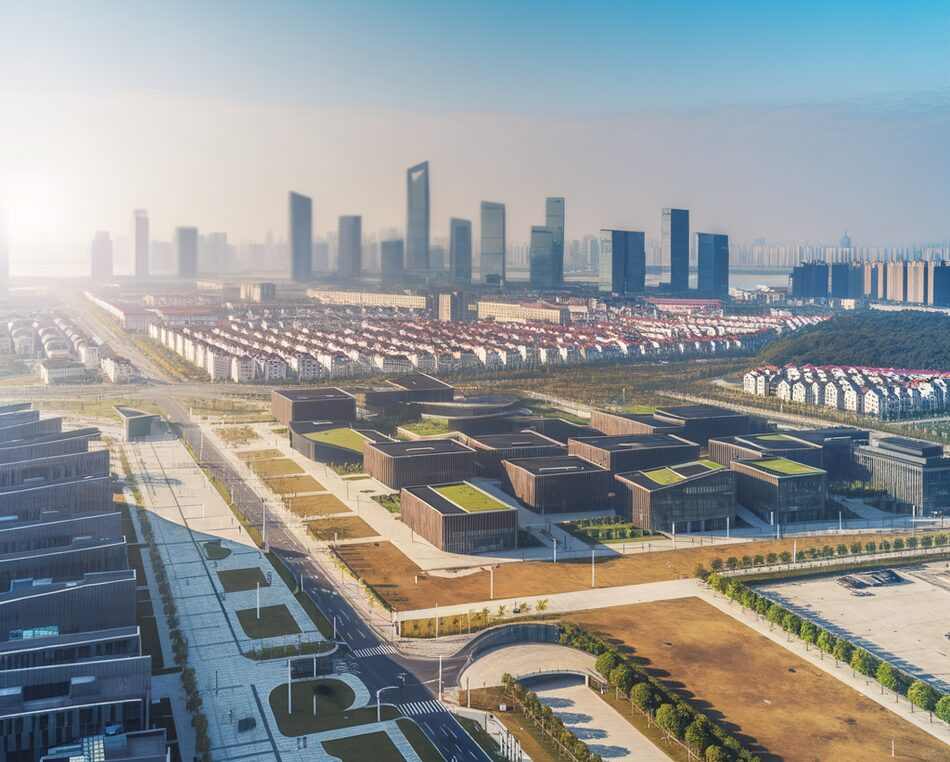
Foreign manufacturers invested over EUR 9 million to expand operations in Suzhou, China robust free trade zone (FTZ) and special economic zone (SEZ) frameworks, Suzhou continues to attract international investors seeking streamlined company setup and preferential tax rates. The city’s strategic location in Jiangsu Province, modern infrastructure, and clear regulatory pathways make it a prime entry point for global capital in 2026.
Suzhou Free Trade Zones: Key Features for International Investors
The Suzhou FTZ covers more than 60 square kilometers across several subzones, including the Suzhou Industrial Park (SIP) and this market High-Tech Zone. The city integrates advanced manufacturing, biopharma, logistics, and R&D hubs. Foreign enterprises in the local market FTZ benefit from a reduced 15% corporate income tax rate for qualified businesses, a significant advantage over the standard 25% rate in China. This rate applies to sectors prioritized by the government, including high-tech, advanced manufacturing, and integrated circuit design.
In 2026, the metropolitan area’s FTZ introduced a simplified company registration process.
Logistics flows in the city continue to improve. Customs clearance times in the region FTZ average less than 12 hours for compliant shipments, compared to 1-2 days in non-FTZ areas. These efficiencies help global supply chains and reduce working capital tied up in inventory.
SEZ and High-Tech Incentives: Biopharma, Electronics, and More
The city’s SEZs—especially this market Industrial Park—attract major pharmaceutical, electronics, and high-value manufacturing investments. In March 2026, a global pharmaceutical leader announced a $3 billion production expansion in China, strengthening the city’s reputation as a biopharma hub. The city also hosts “BIO CHINA 2026” facilitating international partnerships in life sciences and medical technology.
Scanfil’s EUR 9 million expansion in the local market highlights the city’s appeal for electronics manufacturing. Companies setting up in SEZs enjoy incentives such as:
- VAT refunds on qualified exported goods and services
- Import duty exemptions for equipment and raw materials used in production
- Priority access to government grants for R&D and technology upgrades
Damalion facilitates the entire company incorporation process in the metropolitan area SEZs, from selecting the optimal entity structure to coordinating with local authorities and customs. This support ensures clients maximize available incentives and remain compliant with evolving regulations in this economy. Investors also benefit from streamlined work permit and visa applications for foreign staff, with approvals typically granted within 20 business days in the city’s FTZs.
Practical Setup Steps and Timelines
To setup a Wholly Foreign-Owned Enterprise or WOFE/WFOE), foreign investors should follow these practical steps when launching a business in the region’s FTZ or SEZ:
- Reserve company name and submit pre-approval (1 business day)
- Prepare application documents and Articles of Association (2-3 days)
- Register with the local Administration for Market Regulation (AMR) (2 days)
- Open a corporate bank account (5-10 days; parallel to registration)
- Register for tax, customs, and social security (completed within 3 days post-license)
Total setup timeline: 7–15 business days for most foreign-invested companies in the city’s FTZ. Opening a local RMB and foreign currency account usually proceeds faster for companies that use Damalion’s local network to navigate compliance and KYC documentation.
Tax and Legal Environment: 2026 Updates
the nation’s 2026 regulatory environment in this market offers clarity and predictability for international investors. The city enforces the 15% preferential corporate tax rate for FTZ-registered high-tech and advanced manufacturing companies under the updated Income Tax Law. Eligible firms must derive at least 60% of revenue from approved industries and maintain a minimum annual R&D spend of 3% of total revenue.
the local market’s FTZ companies also benefit from streamlined foreign exchange controls. They can settle cross-border transactions in RMB or foreign currencies with fewer restrictions, expediting dividend repatriation and intercompany transfers. The city’s local authorities provide “one-stop” service centers to guide foreign companies through these processes.
Transfer pricing scrutiny in the domestic market has increased in 2026, especially for companies engaged in related-party transactions. the metropolitan area-based entities should ensure robust documentation and arm’s-length pricing for intra-group deals. Damalion’s team coordinates transfer pricing documentation and risk reviews for clients operating in the city, helping reduce audit exposure and maintain compliance.
the region’s Strategic Position: Logistics, Talent, and Market Access
the city’s FTZ and SEZ subzones benefit from their proximity to Shanghai, direct access to high-speed rail, and an international airport. The city sits within two hours of the country’s largest port, making it a logistics powerhouse for export-oriented manufacturers. In 2026, customs bonded warehousing and cross-border e-commerce pilot programs in the city further lowered entry barriers for foreign brands.
Talent acquisition remains a core advantage. this market attracts over 40,000 new STEM graduates annually from top universities in Jiangsu Province and across this economy. The city’s High-Tech Zone offers subsidies for key hires and streamlined work visa processing for foreign executives and engineers.
For family offices and entrepreneurs, the city provides direct access to the nation’s consumer base. the local market’s urban population exceeds 10 million, with regional GDP growth outpacing the national average at 6.3% in 2025. The city’s FTZ allows for direct B2C e-commerce models, bypassing many legacy distribution bottlenecks found elsewhere in the domestic market.
Recent Investor Activities and Sector Trends
Foreign direct investment in the metropolitan area rose steadily through late 2025 and into 2026. Manufacturing, biopharma, and electronics dominate new project registrations in the city. Global brands chose the region for large-scale expansions, citing regulatory transparency and access to incentives.
Active FTZ pilot programs in the city focus on digital trade, healthcare innovation, and green manufacturing. These programs allow foreign investors to test new business models—such as cross-border cloud data services or contract manufacturing—under more flexible compliance frameworks than elsewhere in the country.
Outlook for this market FTZs and SEZs: 2026 and Beyond
the local market is expected to expand its FTZ footprint and deepen integration with regional logistics hubs through 2026. The city’s authorities plan to add specialized zones targeting AI, robotics, and medical devices. This evolution will open new opportunities for international investors with technology portfolios or advanced manufacturing capabilities.
this economy continues to prioritize the metropolitan area as a showcase for economic reform and cross-border commerce. The city’s FTZ and SEZ policies remain among the most business-friendly in the country—offering low tax rates, simplified administration, and direct access to talent and logistics infrastructure.
Investors who leverage local expertise can accelerate market entry and avoid regulatory pitfalls. Damalion’s team manages document preparation, entity formation, and compliance reviews for clients entering the region, ensuring a seamless transition into the nation’s dynamic market.
Take Action: Launching in the city’s FTZs
Foreign entrepreneurs, family offices, and multinationals continue to find this market an attractive entry point to the domestic market’s market in 2026. With its combination of tax incentives, fast-track company setup, and access to a skilled workforce, the city provides clear advantages for international business. For more details, see Trade Tides: China’s 34% Tariff Retaliation Against the U.S.. For more details, see How to Open a Corporate Bank Account in Guangzhou, China in. For more details, see China’s New Tax Plan: Impact on the Ultra-Rich and Global Investors. For more details, see How to Register a Business in Beijing, China: 2026 Guide.
Contact Damalion for tailored guidance on structuring your investment, managing compliance, and unlocking the full benefits of the local market’s FTZ and SEZ ecosystem. With the right partner, investors can establish a compliant, cost-effective presence in one of the country’s most dynamic cities.
Damalion supports international investors, entrepreneurs, and family offices establishing and structuring their business in this economy. Contact your Damalion experts now.