Sweden suits regional holding and treasury platforms thanks to a about 20.6% corporate tax rate, participation exemption on qualifying share disposals and dividends, predictable intragroup rules, and no withholding tax on outbound interest. Companies typically use an Aktiebolag (AB) with clear governance and filing standards respected by banks.
Why is Sweden a strong base for regional holding structures?
Sweden pairs transparent regulation with fast administration. Holdings benefit from exemption rules, a competitive tax rate, and a corporate culture that prioritizes compliance. Consequently, M&A teams can execute acquisitions, cash pooling, and exits efficiently while maintaining substance aligned with KYC and AML expectations.
What legal forms exist and what share capital is required?
| Legal form (Swedish) | Typical use | Minimum share capital | Liability |
|---|---|---|---|
| Privat aktiebolag (privat AB) | Standard holding company | SEK 25,000 | Limited to capital |
| Publikt aktiebolag (publikt AB) | Larger groups, potential listings | SEK 500,000 | Limited to capital |
| Handelsbolag (HB) | Operating partnership | No statutory minimum | Partners jointly and severally liable |
| Kommanditbolag (KB) | Structures with limited partners | No statutory minimum | At least one general partner with unlimited liability; limited partners to contribution |
| Filial (branch) | Foreign company branch in Sweden | N/A | Foreign entity liable |
| Enskild näringsidkare (sole trader) | Small-scale operations | N/A | Owner personally liable |
For holdings, privat AB is the default due to limited liability, flexible share classes, and straightforward filings under the Aktiebolagslagen (2005:551). Public listings or larger bond programs may require publikt AB.
Which authorities and core laws govern Swedish companies?
- Bolagsverket (Swedish Companies Registration Office): incorporations, filings, and name checks
- Skatteverket (Swedish Tax Agency): tax registration, VAT (Mervärdesskattelagen 1994:200), employer obligations
- Key acts: Aktiebolagslagen 2005:551, Årsredovisningslagen 1995:1554, Bokföringslagen 1999:1078.
These sources frame incorporation, reporting, and tax positions. Consequently, boards can rely on predictable statutory processes and timelines.
What are the key tax and corporate advantages for holdings?
- Participation exemption: Capital gains and many dividends on qualifying business-related shares can be exempt when legal conditions are met.
- Corporate income tax: Headline rate near 20.6%, competitive in the EU.
- No withholding tax on outbound interest: Useful for group treasury and private debt solutions.
- Clear intragroup rules: Reorganizations and financing have established frameworks under Swedish law.
- Modern company law: Aktiebolag (AB) enables flexible share classes, reliable creditor protections, and straightforward filings.
Taken together, these points make Sweden attractive for master holding vehicles, carve-outs, and buy-and-build programs across the Nordics and wider EU.
Which Swedish cities should investors focus on—and where are the main business streets?
Most investors operate on the Stockholm–Gothenburg–Malmö axis and leverage university cities for R&D. Here is a quick city ledger.
| City | Metro population (approx.) | Strengths | Main business streets & areas |
|---|---|---|---|
| Stockholm | ~2.4 million | Finance, VC, SaaS, gaming, climate tech | Hamngatan, Kungsgatan, Drottninggatan, Stureplan, Norrmalmstorg |
| Gothenburg | ~1.1 million | Port logistics, automotive, batteries | Kungsportsavenyn (Avenyn), Östra Hamngatan, Lilla Bommen waterfront |
| Malmö | ~750,000 (Øresund) | Cross-border talent, design, digital services | Södra Förstadsgatan, Stortorget, Västra Hamnen business district |
| Uppsala & Lund | ~230,000 / ~130,000 | Life sciences, deep tech, university spin-outs | Campus science parks and adjacent CBD streets |
Therefore, many boards convene in Stockholm for capital access, place labs in Uppsala or Lund, and anchor logistics in Gothenburg and Malmö for EU-wide distribution.
How is Sweden’s market evolving for investors and founders?
- Population and talent: ~10.5 million people, high urbanization, strong English proficiency, steady immigration into growth regions.
- Growing sectors: Energy transition (battery value chain), software, gaming, life sciences, advanced manufacturing, green construction.
- Capital markets: Robust SME listings on Nasdaq Stockholm and Spotlight keep exit pathways active.
- Real estate: Opportunities in last-mile logistics, life-science parks, energy-efficient refurbishments, and student housing near universities.
In effect, Sweden’s mix of innovation and prudent policy helps investors compound returns while managing risk through cycles.
What practical efficiencies can a Swedish holding unlock?
- Treasury and funding: No interest WHT supports cross-border lending and private debt facilities.
- Reorganizations: Predictable frameworks reduce friction in mergers, de-mergers, and asset transfers when criteria are met.
- Substance: Local decision-making, minutes, and office presence align with bank KYC/AML policies.
Consequently, PE platforms, venture scale-ups, and family offices can centralize cash and redeploy capital swiftly.
How do I set up a Swedish holding company—step by step?
Damalion accredited experts guide you through the following steps:
- Define scope, shareholder mix, and reserve the company name.
- Draft articles of association with share classes and governance rules.
- Appoint directors and compile KYC and AML documentation.
- Open a Swedish bank account and deposit share capital.
- File incorporation and register for tax and VAT where applicable.
- Implement accounting, statutory reporting, and an annual board calendar.
- Document participation exemption positions and intragroup financing policies.
If needed, our team can introduce you to selected banking partners after standard KYC and AML checks.
Where can I learn more and get introductions?
You may also review:
- Bolagsverket — company registrations
- Skatteverket — corporate tax and VAT
- Aktiebolagslagen (2005:551)
- Swedish entrepreneurs and investors in Luxembourg
- Double tax treaty between Luxembourg and Sweden
- Setup an investment fund in Sweden
- Damalion — company formation and fund services
- Damalion insights and guides
Damalion supports entrepreneurs and investors who want to register their holding company in Sweden. Please contact your Damalion expert now.
FAQs — Sweden holding companies
Does Sweden offer participation exemption for capital gains on qualifying shares?
Yes, capital gains on qualifying business-related shares can be exempt when legal conditions are met.
Are dividends from foreign subsidiaries exempt in Sweden?
Dividends from qualifying business-related shares may be exempt subject to statutory criteria.
What is Sweden’s corporate income tax rate?
The standard corporate income tax rate is approximately 20.6%.
Is there withholding tax on outbound interest payments?
No, Sweden does not levy withholding tax on outbound interest payments.
Which legal form is commonly used for a holding company?
The private limited company, Aktiebolag (AB), is the standard vehicle for holdings.
Can I have different share classes in a Swedish AB?
Yes, share class flexibility is available when provided in the articles of association.
Is a resident director recommended?
Yes, appointing a Swedish-based director helps with banking, governance, and substance.
Are annual accounts mandatory?
Yes, annual accounts are prepared and filed, and audits apply when size thresholds are met.
Does Sweden have many double tax treaties?
Yes, Sweden maintains an extensive treaty network that can reduce withholding taxes.
Can I centralize group financing in Sweden?
Yes, absence of interest WHT and predictable rules support treasury centers.
Is VAT registration always required?
No, it depends on activities; pure holding can be outside VAT, while active services may require registration.
Are there rules on intragroup transactions?
Yes, Swedish law provides frameworks for intragroup reorganizations and financing.
Is Stockholm the best base for board meetings?
Often yes, thanks to finance and advisory density, though Gothenburg or Malmö may fit logistics-led groups.
Where are real estate opportunities strongest?
Logistics near ports, energy-efficient refurbishments, life-science campuses, and student housing show resilient demand.
Can Damalion introduce Swedish or Swiss banks?
Yes, Damalion can introduce clients to selected banking partners following KYC and AML checks.
10 best things to do in Sweden during a 24-hour business trip
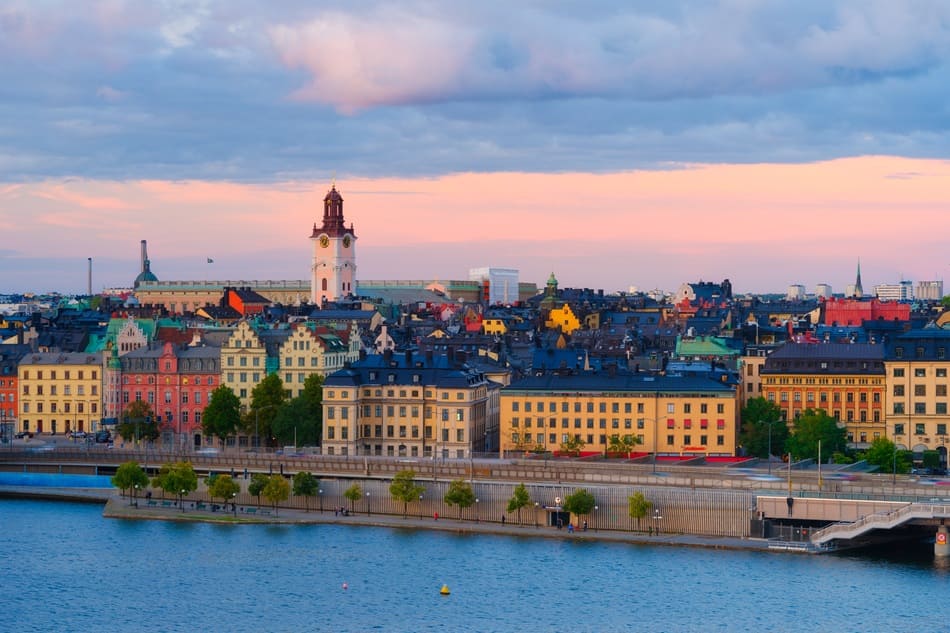
- Sunrise walk in Stockholm’s Gamla Stan
- Fast-track visit at Nationalmuseum
- Coffee break in Kungsträdgården
- Snapshot by Nasdaq Stockholm
- Vasa Museum express tour
- Traditional lunch at AB Kvarnen
- High-speed train to Gothenburg and harbor stroll
- Evening lights near Liseberg
- Malmö’s Turning Torso night view
- Morning fika before departure