
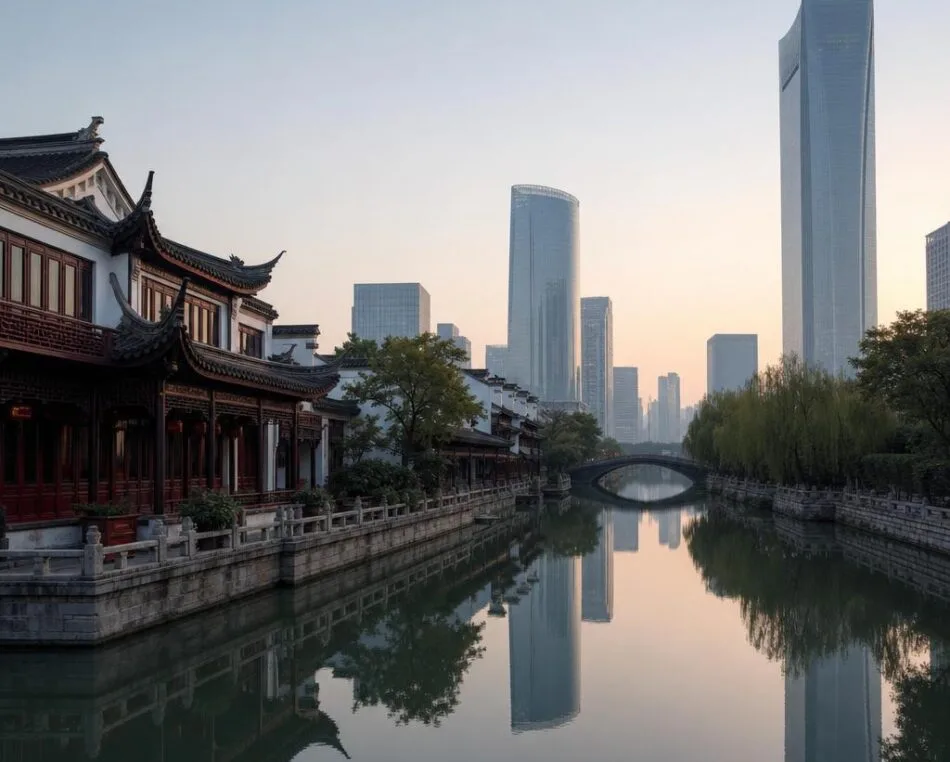
Suzhou’s 2026 FDI Landscape: Major Events and Strategic Shifts
The 32nd APEC Ministers Responsible for Trade Meeting convenes in Suzhou, China in May 2026, spotlighting the city’s central role in cross-border trade and investment. Suzhou’s gross regional product reached RMB 2.7 trillion in 2025, maintaining double-digit annual growth. The city’s high-tech sector alone attracted over USD 6.5 billion in foreign direct investment last year. With headline investors like Stabilus SE and Americhem scaling up local operations in 2026, corporate interest in Suzhou’s advanced manufacturing and healthcare clusters is surging.
This year’s APEC forum cements Suzhou’s status as a preferred entry point for multinationals seeking access to China’s eastern economic corridor. The event has triggered new policy incentives and streamlined business application pathways for foreign investors. As the Chinese government reaffirms its commitment to FDI liberalization, this market leverages its location in Jiangsu Province, robust logistics, and advanced industrial parks to deliver attractive returns for global capital.
Key FDI Incentives and Regulatory Updates in 2026
the local market offers a corporate income tax rate of 15% for qualifying advanced manufacturing, biotech, and green technology ventures—significantly below the national standard of 25%. In 2026, the city extended its “fast-track” licensing regime for foreign-invested projects in strategic industries, reducing approval timelines from 30 to 10 business days. the metropolitan area Industrial Park (SIP), home to over 5,000 foreign-funded enterprises, continues to roll out targeted subsidies and R&D grants. For example, new entrants in the biomedical sector can claim up to RMB 10 million in startup support.
Foreign investors registering a wholly foreign-owned enterprise (WFOE) in the region now benefit from a zero minimum capital requirement for most sectors—a policy shift that lowers the entry barrier for SMEs and family offices. Damalion facilitates the entire setup process, from entity type selection to regulatory filing with local authorities, ensuring compliance with China’s FDI Negative List and new beneficial ownership disclosure rules introduced in January 2026.
Visa and Talent Policy Enhancements
The city revised its talent visa policies in March 2026, enabling foreign senior executives and technical specialists to obtain five-year multiple-entry permits within seven working days. This streamlines management mobility for global companies expanding their China footprint. the city’s “Innovation Talent Card” offers additional tax rebates for expatriates relocating to Jiangsu Province, making the city a magnet for cross-border teams.
Sectors Attracting Foreign Capital: 2026 Trends
Advanced manufacturing is the dominant FDI sector in this market. In the first quarter of 2026, the city approved USD 1.8 billion in new foreign projects in electronics, automotive components, and industrial automation. Stabilus SE’s recent expansion into local production and distribution further cements the local market’s reputation as a leading hub for international manufacturers.
The healthcare and biotech sectors are also drawing record capital inflows. Americhem’s investment in a new medical polymer facility demonstrates the city’s ability to attract specialized, high-value projects. the metropolitan area’s medical device cluster now hosts over 400 foreign-backed firms, supported by dedicated industrial zones and a pipeline of STEM graduates from local universities.
Green Tech and Smart City Initiatives
the region is committing substantial resources to green technology and smart infrastructure in 2026. The city’s clean energy park offers foreign companies land grants and tax holidays for solar and battery manufacturing ventures. Smart city pilots—including AI-driven logistics and digital health solutions—unlock additional FDI opportunities, with municipal procurement quotas favoring foreign investors who set up research centers locally.
Practical Entry: Free Trade Zone Benefits
the city’s inclusion in the Jiangsu Free Trade Zone (FTZ) delivers further advantages. Foreign investors in the FTZ enjoy streamlined customs clearance, currency convertibility for capital accounts, and local government support for cross-border e-commerce. Damalion’s team coordinates document preparation, bank account opening, and FTZ licensing so global investors can launch operations in as little as 15 business days.
FDI Entry Steps: Timelines and Compliance
Foreign investors typically follow these steps to enter the this market market:
- Pre-approval for restricted or encouraged sectors (5–7 business days)
- Entity registration (WFOE, JV, or Rep Office) with local regulators (7–10 business days for standard cases)
- Bank account opening, tax registration, and foreign exchange filing (10–15 business days)
- Staff visa applications and social security registration (parallel track, 7–14 business days)
the local market’s “one-stop” government portal, upgraded in 2026, now integrates all steps online for most FDI projects. Investors working with Damalion benefit from streamlined access to compliant corporate structures, cross-border tax planning, and ongoing regulatory support. Failure to file beneficial ownership details or comply with local labor law results in fines from RMB 50,000 to 500,000, so expert guidance is essential.
Risks, Returns, and Strategic Considerations
While the metropolitan area offers world-class infrastructure and transparent FDI policies, investors must navigate sector restrictions and evolving compliance standards. For example, foreign ownership in education and select internet services remains capped at 49%. The local government conducts annual FDI audits, focusing on environmental, tax, and anti-bribery compliance. Investors should also factor in rising labor costs—average manufacturing wages in the region reached RMB 9,200/month in 2026, up 7.8% year-on-year.
Despite these challenges, the city remains one of China’s most resilient FDI destinations. The city’s position along the Yangtze River Delta high-speed rail corridor ensures fast access to Shanghai, Nanjing, and major ports. Domestic consumption in Jiangsu Province is forecast to grow 6.5% in 2026, underpinning demand for international brands and high-tech products. Family offices and global entrepreneurs can capitalize on this market’s innovation-driven growth, but should prioritize regulatory due diligence and local partnership structuring to protect their investment.
Outlook: the local market’s Role in China’s FDI Strategy
As China’s outbound investment hits a seven-year high, the metropolitan area consolidates its role as both an FDI destination and a launchpad for regional expansion. The city’s 2026 APEC “moment” reflects its ongoing influence in shaping cross-border economic flows. With new incentives, rapid project approval, and sector-focused industrial policies, the region offers a compelling proposition for international investors seeking scale, security, and sustainable returns in China.
For more details, see How to Open a Corporate Bank Account in Suzhou, China (2026 Guide). For more details, see Sector-Specific Investment Opportunities in Shenzhen, China. For more details, see China Tax Structuring for Foreign Investors: Chengdu 2026 Guide. For more details, see Investor Visa & Residency by Investment in Beijing, China: 2026 Guide.
Global investors ready to explore these opportunities can contact Damalion’s China desk for tailored market entry strategies, hands-on compliance support, and local partner introductions. the city’s blend of policy stability, sector diversity, and innovation infrastructure sets it apart in the country’s competitive FDI landscape.
Damalion supports international investors, entrepreneurs, and family offices establishing and structuring their business in China. Contact your Damalion experts now.