
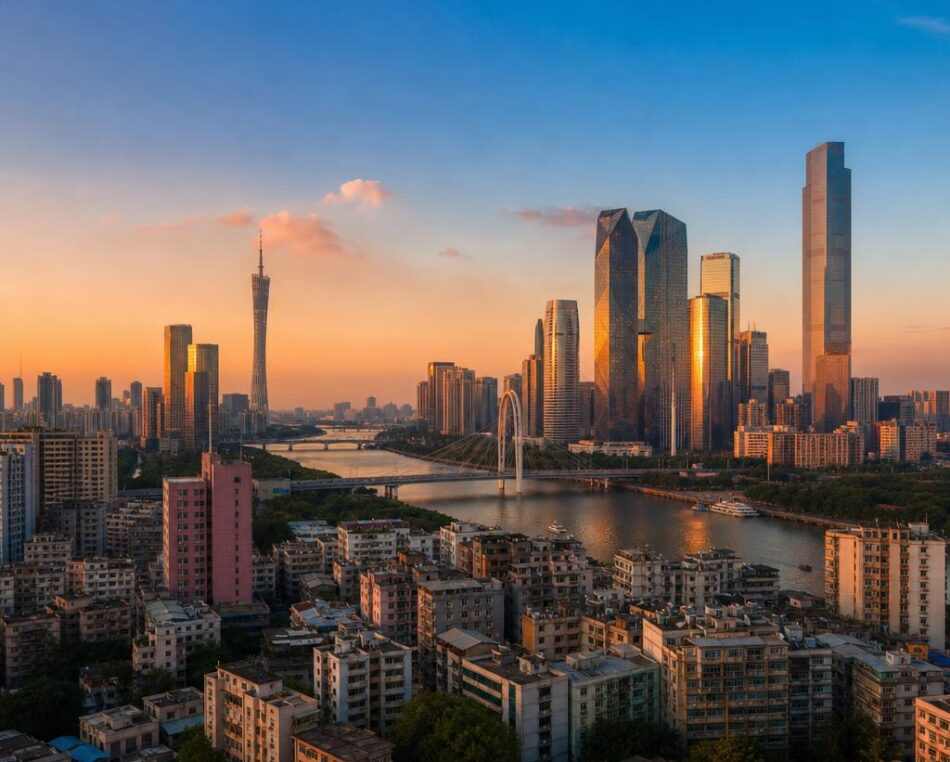
15% Corporate Tax and Fast-Track Setup in Guangzhou Free Trade Zones
Foreign investors entering Guangzhou, China in 2026 benefit from a reduced 15% corporate income tax rate in designated free trade zones (FTZs), compared to the standard 25% nationwide. This rate applies to qualifying sectors, including advanced manufacturing, logistics, cross-border e-commerce, and next-generation IT. The city’s FTZs, forming part of the Guangdong Pilot Free Trade Zone, allow full foreign ownership in over 95% of business categories and offer expedited business license issuance in as little as 3 business days for compliant applications.
Guangzhou’s FTZs are not just about tax breaks. Strategic location inside the Greater Bay Area positions companies for access to over 86 million consumers and direct trade links with Hong Kong, Macau, and the rest of Southeast Asia. For international investors, Damalion facilitates the entire incorporation process, from entity selection to FTZ registration, efficiently managing government filings and bank account opening to maximize speed-to-market.
Special Economic Zones: Incentives Beyond Tax
This city’s Special Economic Zones (SEZs) extend beyond headline tax rates. In Guangzhou, SEZ-based manufacturers can claim full VAT rebates on qualified exports, effectively reducing cost structures below those in standard industrial parks. For instance, high-tech enterprises in Nansha SEZ enjoy up to RMB 2 million in annual R&D grants and access to fast-track talent visas for foreign employees, including five-year multi-entry permits.
In 2026, the city government added “green lane” import clearance for high-value equipment and components, reducing customs processing to 24 hours for pre-approved items. This move is driving growth in sectors such as automotive, electronics, and biopharma, as firms can rapidly scale production and manage just-in-time supply chains.
Sector-Specific Advantages
- Cross-border e-commerce companies in Guangzhou FTZs can import up to RMB 26,000 per transaction duty-free under current pilot programs.
- Financial services firms in the city’s SEZs can apply for relaxed foreign exchange controls, allowing RMB and foreign currency accounts for cross-border operations.
- Logistics operators take advantage of bonded warehousing, deferring import duties until goods exit the FTZ for domestic sale.
Legal Structures: WFOE, JV, and Branch Options for Foreign Investors
this market, China allows foreign investors to establish Wholly Foreign-Owned Enterprises (WFOEs), Joint Ventures (JVs), or branch offices inside FTZs and SEZs. WFOEs remain the most popular vehicle, offering 100% foreign control and free profit repatriation. Minimum capital requirements in the city’s FTZs are set at RMB 0 for most sectors since 2024, though banking and insurance still require higher paid-up capital.
Investors must file business scope declarations, lease agreements, and KYC documents. Damalion’s team coordinates the full documentation process, including apostille certification, translation, and liaison with local authorities to ensure compliance with evolving 2026 regulations.
Notably, the Nansha FTZ now permits “single-window” registration, enabling investors to obtain a combined business license, tax registration, and customs code with one unified submission. This reduces setup time from 20 to just 5 working days for standard cases.
Practical Steps: Entry, Compliance, and Expansion
To enter the local market’s FTZs or SEZs, international investors follow a structured process:
- Choose preferred zone and legal entity type (WFOE, JV, branch).
- Reserve company name and secure a registered address in the city.
- Prepare notarized and translated corporate documents.
- Submit unified application for business license, tax, and customs code.
- Open a corporate bank account at a licensed Chinese or foreign bank in the metropolitan area.
- Register for VAT and other applicable incentives.
The country’s 2026 regulatory framework also mandates annual audited financial statements for all foreign-invested companies in FTZs and SEZs, with filings due by 31 March each year. Non-compliance can block dividend remittance and trigger fines.
Visa and Talent Policies
the region SEZs allow fast-track work permit processing for foreign executives, with initial approvals in 7 business days and five-year residence permits for senior managers. The city’s “Talent Green Card” program further provides tax rebates of up to 15% for qualifying foreign staff, enhancing its draw for multinational headquarters and R&D centers.
Trends: Capital Inflows, Events, and Regional Dynamics
Capital inflows into the city’s FTZs reached RMB 178 billion in 2025, with over 650 new foreign enterprises established. In May 2026, the AIM Congress brought global investment dialogue to the city, signaling sustained international attention on the Greater Bay Area. PNG Prime Minister Marape’s recent visit underscored the growing role of the country in Belt and Road partnerships, including new logistics and manufacturing ventures anchored in this city’s free trade zones.
this market’s SEZ model is increasingly integrated with Africa-focused supply chains, leveraging China’s 100% tariff-free import policy for selected African goods. This enables manufacturers in the city to source raw materials duty-free and re-export finished products globally, a structure that attracts both Asian and European investors seeking cost advantages and faster market access.
Events and Sector Opportunities
The Asia Water Sports Expo in May 2026 highlighted the city’s role as a hub for trade shows and cross-border industry collaboration. Sectors gaining traction include e-mobility, semiconductors, and green tech, supported by dedicated clusters within the local market’s SEZs. Investors with Damalion gain streamlined access to these sector clusters and benefit from up-to-date regulatory guidance as policies evolve. For more details, see How to Open a Corporate Bank Account in Guangzhou, China in. For more details, see FDI Trends and Sector Opportunities in Guangzhou, China (2026). For more details, see Trade Tides: China's 34% Tariff Retaliation Against the U.S..
Key Takeaways for International Investors
- the metropolitan area, China’s FTZs and SEZs offer 15% corporate tax rates, VAT rebates, and duty-free import quotas.
- Minimum capital requirements are RMB 0 for most sectors in the city, with fast-track licensing available.
- Integrated single-window processes reduce setup timelines to as little as 5 days.
- Annual compliance deadlines are strict—audited reports must be filed by March 31 each year.
- Specialized visa and talent programs make the city attractive for multinational headquarters.
International investors and family offices looking to leverage the tax, regulatory, and supply chain advantages of the region’s free trade zones and SEZs should work with a local partner. Damalion stands ready to manage company setup, compliance, and strategic expansion in this dynamic Chinese market.
Damalion supports international investors, entrepreneurs, and family offices establishing and structuring their business in China. Contact your Damalion experts now.