
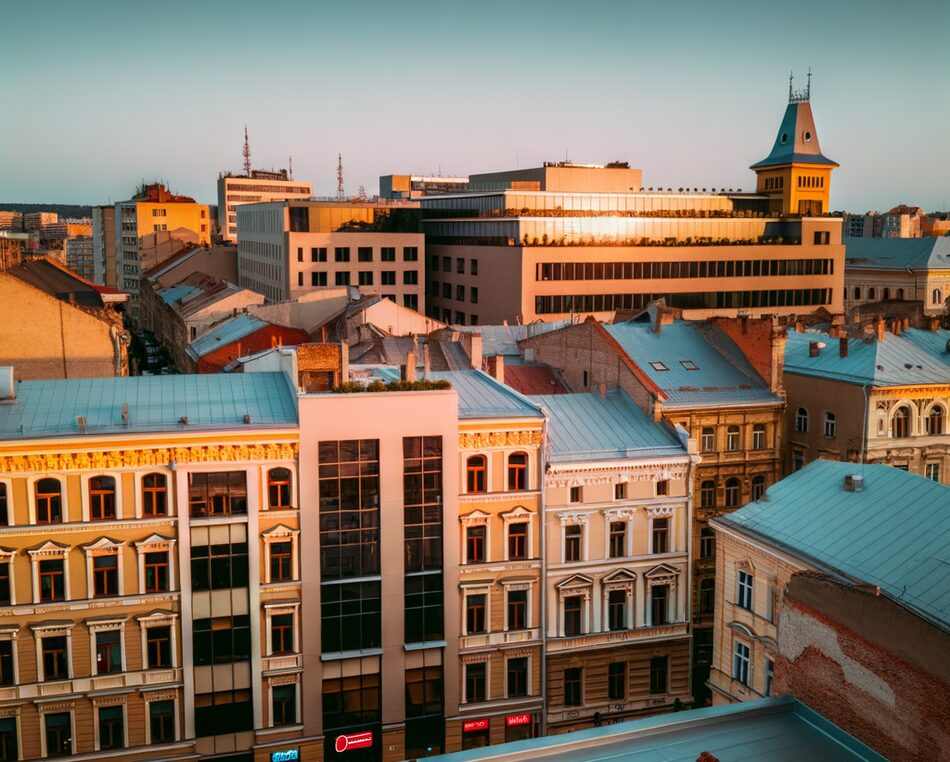
FDI Momentum: Why Timișoara Attracts International Real Estate Investors
A surge of infrastructure and commercial projects in Timișoara is redefining the city’s real estate landscape for 2026. The recent award of a major stadium construction contract to a domestic builder signals local confidence, while a EUR 10 million expansion in the education sector and the arrival of major retail brands highlight the region’s broad economic base. Vest Ventures’ debut with a EUR 16 million fund underlines the western region’s rising appeal for capital—especially in property and venture investments.
Notably, regional shopping centers now lead the country’s property investment rankings, even as overall volumes hit a 12-year low. This indicates a shift in investor focus toward stable, income-generating assets in secondary cities rather than capital-dependent speculative projects. The city, positioned at the crossroads of EU logistics corridors, is increasingly viewed as a strategic base for warehousing, offices, and mixed-use developments. For global investors, these dynamics create an environment primed for medium- and long-term capital appreciation.
Legal Framework: Property Rights, Foreign Ownership, and Buyer Rules
International buyers—both EU and non-EU nationals—face distinct rules when entering the Romanian property market. For EU individuals and legal entities, the right to acquire land and built properties aligns with domestic investors, following full market liberalization. Non-EU nationals, however, may purchase buildings directly but face restrictions on acquiring land, which generally requires forming a local company structure, such as an SRL (the equivalent of a limited liability company). The minimum share capital for an SRL stands at RON 500, and shareholder liability is limited to their contributions.
Ownership is protected under national law, with freehold and leasehold options available. Title registration is mandatory and centralized, ensuring transparent proof of ownership. The transfer process typically involves due diligence, a notarized sale-purchase agreement, and registration in the land book. Transaction timelines can range from 2 to 6 weeks, depending on complexity. Damalion streamlines these procedures for international investors, mitigating legal and administrative friction through tailored transaction management and company setup support.
Market Trends: Prime Sectors, Returns, and 2026 Outlook
In 2026, commercial real estate remains the dominant sector in this market, driven by new retail entrants and the expansion of logistics hubs. The influx of foreign brands, such as large-format retailers, has intensified demand for both city-center and outlying commercial assets. Industrial and logistics properties are experiencing yield compression, reflecting increased investor appetite and tenant demand linked to the city’s proximity to pan-European transport routes.
Residential yields in the city typically range between 5% and 7%, with higher returns possible for value-add or repositioning strategies. Commercial yields vary by segment: prime retail can achieve 7%–8%, while logistics assets are often in the 8%–9% bracket, especially for new or strategically located developments. Despite a dip in national investment volumes, the region’s fundamentals—growing purchasing power, educational investment, and infrastructure upgrades—are outpacing trends in many other Romanian regions.
Investors should note that, while the country is an EU member, transactions are conducted in RON, not EUR, introducing currency considerations into deal structuring and financing. Damalion advises on cross-border structuring, hedging strategies, and optimal holding vehicles to safeguard and enhance returns for both institutional and private capital.
Entry Strategies and Practical Steps for International Buyers
For foreign investors, structuring the acquisition vehicle is critical. Most non-EU buyers opt for SRLs, which allow direct control and limited liability, and are eligible for a 16% corporate income tax or, for qualifying microenterprises, a 1% revenue tax. Company registration typically takes 7–10 business days, with Damalion facilitating end-to-end incorporation, bank account setup, and regulatory compliance. EU nationals may purchase directly as individuals or through legal entities, offering greater flexibility in asset structuring and tax optimization.
Due diligence remains essential, particularly in a market where historic property records and recent urban development can create title complexities. Investors should commission full technical and legal audits before acquisition. Transaction costs include a 3%–5% notary fee, a 0.5% land book registration fee, and VAT at 19% for new builds (unless exemptions apply). Ongoing property management, leasing, and tax compliance can be outsourced, with Damalion providing bespoke solutions for portfolio owners and family offices seeking scale or diversification.
In summary, Timișoara has emerged as a focal point for property investment within Romania, offering regulatory clarity, diverse asset classes, and strong fundamentals. To access tailored guidance or initiate your next acquisition, contact your Damalion experts now.
- Explore more about Investment structuring for international buyers.
- Learn how holding vehicles can support cross-border acquisitions.
- Access the global investment platform for real estate and alternative assets.
- Discover European Real estate fund solutions for portfolio allocation.
- Read more insights on the Damalion knowledge hub.
- Compare with other real estate markets in Central Europe.
- For owners seeking expansion, our ownersinvestmenty support accelerates cross-border moves.
Damalion supports international entrepreneurs and investors to setup their company in Eastern Europe. Contact your Damalion experts now.