
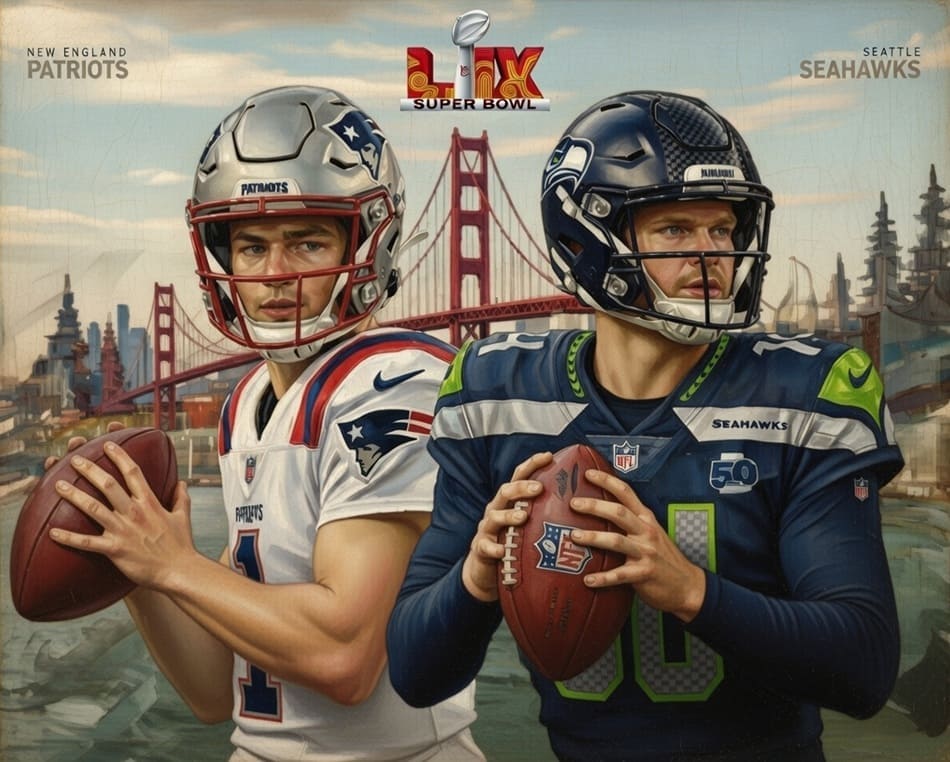
Welcome to Super Bowl LX
Super Bowl LX should not be analysed solely as a sporting final. From a legal and financial standpoint, it represents one of the most concentrated annual stress tests of contracts, capital structures, and regulatory systems in the United States. For private equity sponsors, institutional investors, and family offices, the Super Bowl compresses years of economic assumptions into a single operating week.
The event forces real assets, media platforms, payment systems, labour frameworks, insurance coverage, and municipal infrastructure to operate simultaneously at peak load. Failures are public, measurable, and legally actionable. Success validates underwriting models and long-term capital allocation decisions.
Super Bowl LX and NFL Ownership Rules: Structuring Around Control
The National Football League maintains strict limitations on ownership control, explicitly restricting majority private equity ownership. As a result, financial sponsors do not pursue traditional buyouts. Instead, they rely on minority equity positions, preferred instruments, structured debt, and exposure through adjacent asset classes.
From a US law review perspective, these structures rely on carefully negotiated minority protections, information rights, liquidity preferences, and exit mechanisms that comply with league governance rules. For European investors accustomed to control-based private equity, this model represents a significant departure — one where economic exposure is decoupled from operational authority.
Family offices, in particular, are drawn to these structures because they mirror long-duration capital strategies: limited governance involvement, predictable cash flows, and scarcity-driven valuation appreciation.
Super Bowl LX and Stadium-Centric Infrastructure Law
Super Bowl host cities expose the legal complexity of modern stadium ownership. Stadiums are no longer single-use facilities; they are infrastructure hubs governed by public-private partnership agreements, municipal concessions, zoning overlays, and long-term land leases.
Super Bowl LX places these arrangements under extreme scrutiny. Transport networks, policing obligations, emergency services, and crowd control are coordinated through layered contracts between city authorities, stadium operators, and private service providers.
For private equity infrastructure funds and family offices investing in real assets, Super Bowl week validates whether concession agreements, maintenance obligations, and liability allocations function as drafted.
Super Bowl LX as a Benchmark for Global Media Rights
Super Bowl advertising rates establish the upper boundary of global live-content pricing. Broadcast and streaming contracts negotiated years in advance are implicitly benchmarked against Super Bowl performance metrics.
Private equity firms investing in media platforms, sports rights aggregators, and advertising technology use Super Bowl data as a reference point for valuation multiples. European investors evaluating US media exposure view the Super Bowl as the clearest signal of pricing power in live entertainment.
Legally, these valuations depend on exclusivity clauses, territorial licensing, digital distribution rights, and antitrust-safe bundling — all of which are tested by the event’s scale.
Super Bowl LX and Hospitality as a Private Equity Asset Class
Hospitality assets experience their most extreme pricing dynamics during Super Bowl week. Hotels, serviced apartments, and short-term accommodation platforms operate under compressed demand curves that significantly outperform seasonal averages.
Private equity sponsors and family offices holding hospitality assets treat the Super Bowl as a live pricing experiment. The legal dimension includes labour compliance, temporary licensing, alcohol permits, consumer protection obligations, and event-specific insurance coverage.
The event exposes operational weaknesses that may otherwise remain hidden during normal trading periods.
Super Bowl LX and the Regulation of Sports Betting and Payments
The Super Bowl represents the single largest legal betting event in the United States. For private equity-backed sportsbooks, payment processors, and data providers, the event concentrates annual transaction volumes into a single weekend.
From a legal standpoint, this tests AML compliance systems, transaction monitoring thresholds, data licensing agreements, and regulatory coordination across state jurisdictions.
European private equity firms active in regulated gaming markets often compare Super Bowl operations to stress tests imposed by EU regulators, making the event particularly relevant for cross-border investors.
Super Bowl LX as a Risk Management Exercise for Family Offices
Family offices approach Super Bowl exposure differently from leveraged private equity funds. Their focus lies in capital preservation, reputational risk, and intergenerational asset durability.
Exposure is often indirect: real estate near stadiums, hospitality portfolios, infrastructure funds, or minority positions in media platforms. The Super Bowl allows these investors to observe how assets behave under extreme demand without assuming operational risk.
Super Bowl LX and Insurance, Liability and Force Majeure
Large-scale events magnify liability exposure. Super Bowl LX activates complex insurance frameworks covering public safety, event cancellation, terrorism, weather disruption, and crowd-related claims.
For lawyers and investors, the event demonstrates how force majeure clauses, indemnities, and liability caps operate in real time.
Super Bowl LX: A Capital Markets Reality Check
Ultimately, Super Bowl LX serves as a verification mechanism. Capital structures either withstand pressure or fail visibly. Contracts either allocate risk effectively or expose gaps.
For US legal scholars, European private equity professionals, and global family offices, the Super Bowl is not entertainment – it is an annual audit conducted in public.
Damalion supports international players by facilitatings football team acquisitions along with private debts and private equity solutions. Please contact your Damalion experts.
Levi’s Stadium Location
Frequently Asked Questions
1. Why is the Super Bowl relevant to private equity?
It validates valuation and operational assumptions at scale.
2. Can private equity own NFL teams?
Only through minority and league-approved structures.
3. Why do law reviews analyse the Super Bowl?
Because it stress-tests contracts and regulation.
4. Is the Super Bowl relevant to European investors?
Yes, as a benchmark for global media pricing.
5. Why do family offices pay attention?
For risk, durability, and long-term exposure.
6–20. The Super Bowl influences infrastructure, insurance, hospitality pricing, betting regulation, labour law, municipal finance, security obligations, and capital allocation decisions across asset classes.